Car wash LED lighting for self-serve bay and wet commercial wash areas

Buying car wash LED lights is not just about choosing the brightest fixture. In a commercial wash environment, the real question is whether the lighting system will survive water, chemicals, daily operating hours, and constant visibility demands while still making vehicles look clean and attractive.

This guide is for operators, contractors, distributors, and project buyers comparing LED lights for car wash bays, tunnels, arches, vacuum stations, and detailing areas.

Quick Buying Tips

  • Choose fixtures with at least IP65 protection for normal wash-bay conditions.
  • For most wash environments, 5000K is preferred for visibility and clean appearance.
  • Uniformity matters more than raw brightness alone.
  • Wet-environment reliability is often more important than low upfront cost.
  • Buyers should compare maintenance cost, fixture lifespan, and driver reliability—not just wattage.

Table of Contents

What Should You Look for When Buying Car Wash LED Lights?

The best buying decision usually comes down to six things:

  • waterproof rating
  • fixture layout suitability
  • color temperature
  • uniform light distribution
  • maintenance and driver reliability
  • commercial project support

In a wash facility, cheap lighting often becomes expensive later through driver failure, corroded parts, inconsistent light output, or repeat service calls.

What Types of LED Lights Work Best for Car Washes?

There is no single fixture for every zone. Different parts of a wash site usually need different lighting approaches.

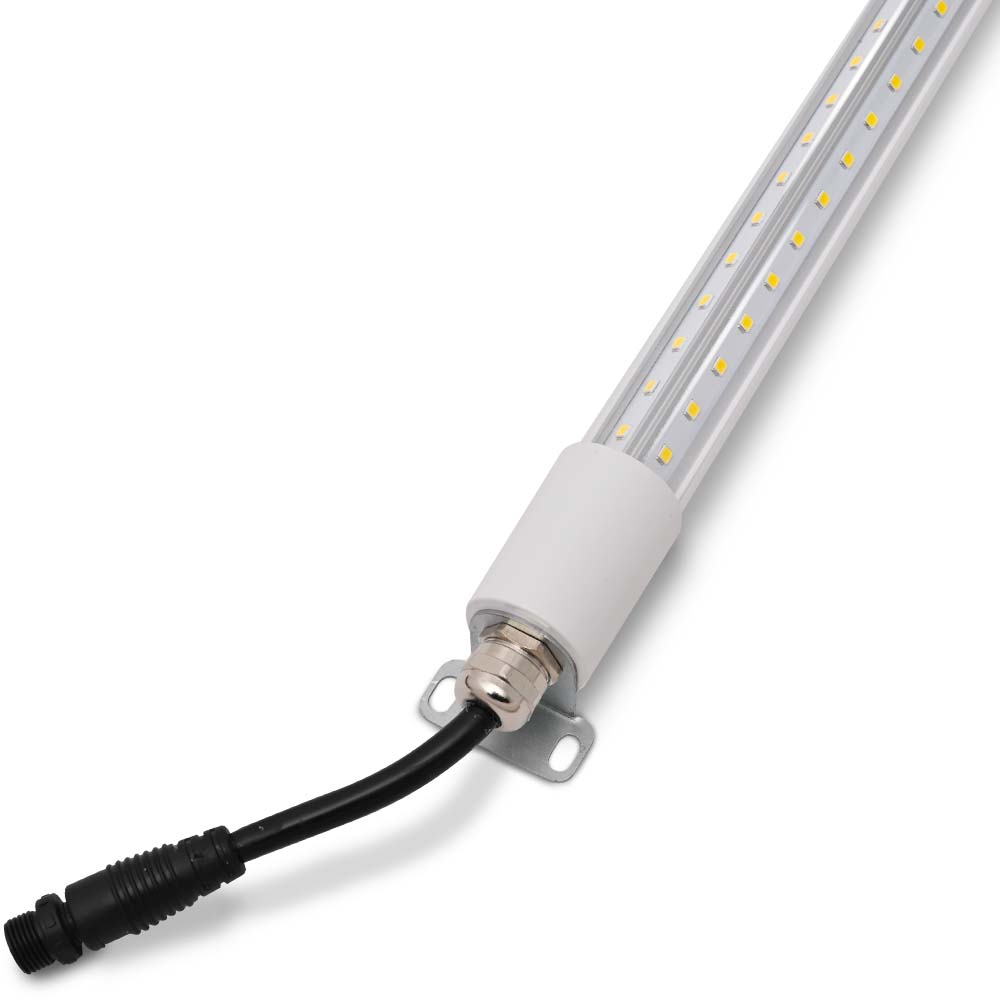
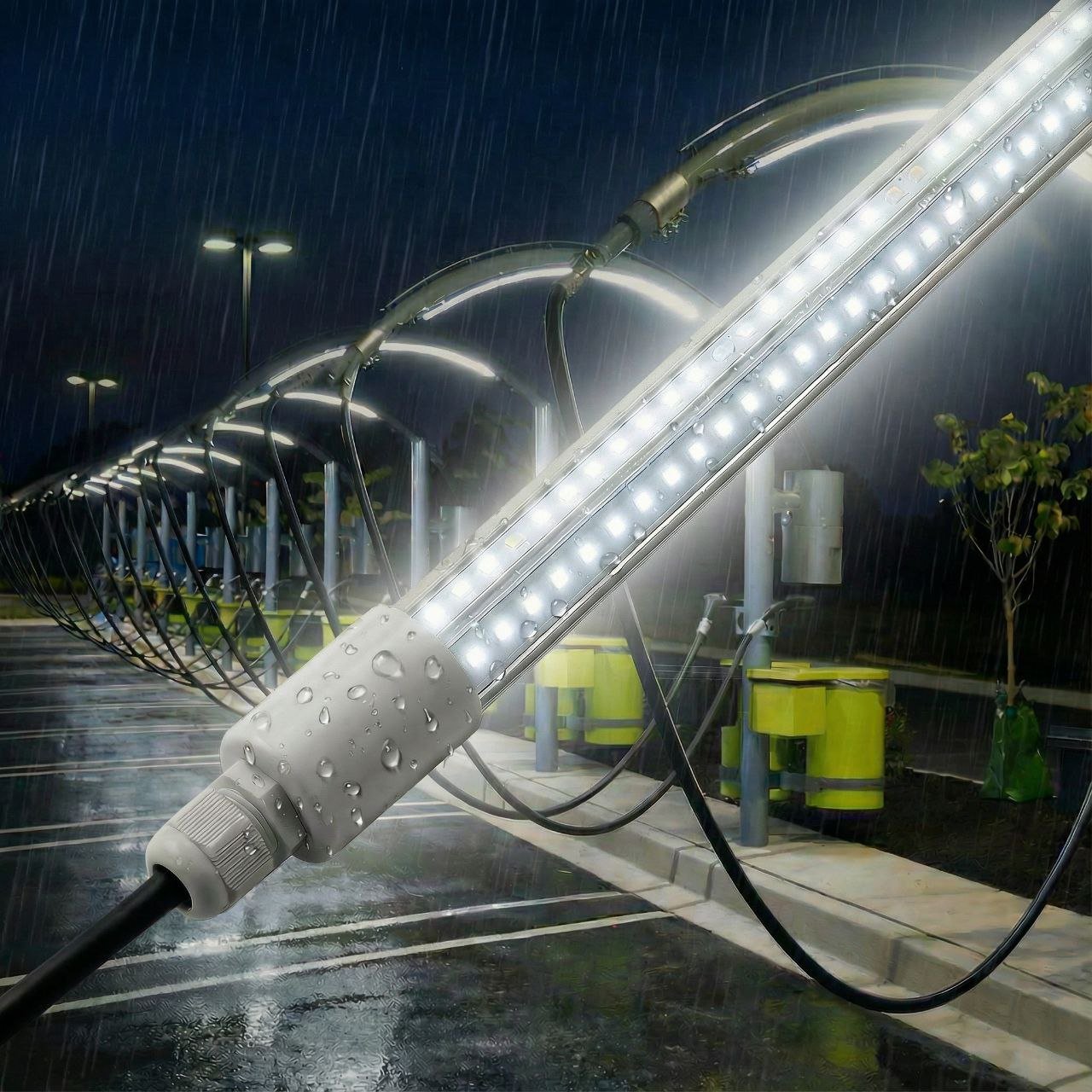
Waterproof LED tube lighting for car wash bay applications

Waterproof linear LED tube systems are often used in wash bays, arches, and side-wall layouts where even coverage is important.
Car wash vacuum area with commercial lighting

Vacuum stations and transition zones often need a different balance of glare control, brightness, and customer comfort.

Common fixture choices include:

  • waterproof LED tubes for wash bays and vacuum zones
  • vapor-tight fixtures for utility or wet service areas
  • specialty linear lighting for arches and visual presentation areas
  • appearance-focused fixtures for detailing or promotional wash areas

For HAROLUX’s main product direction in this category, start here: Car Wash LED Lighting Product Page.

Why Do IP Rating and Durability Matter So Much?

Car wash environments are hard on fixtures. Water spray, detergent residue, humidity, and long operating hours can quickly expose poor build quality.

Feature What to Check Why It Matters
IP rating IP65 minimum, sometimes IP66 protection against water jets and wet conditions
Housing quality sealed enclosure, corrosion resistance longer life in harsh wash environments
Driver reliability stable commercial driver design fewer service calls and less downtime

For many buyers, IP65 is the minimum starting point. If the fixture sits in a more aggressive spray zone, higher protection may be justified.

What Color Temperature Is Best for Car Wash LED Lights?

In most wash applications, 5000K is a strong default. It gives a crisp, clean appearance and helps reveal dirt, residue, and missed spots on paintwork.

  • 5000K: strong visibility, bright clean look, common in wash bays
  • 4000K: balanced look for mixed-use areas or customer-facing zones
  • 6500K: sometimes used, but can feel harsh if optics are poor

The best result usually comes from combining the right color temperature with good uniformity and low-glare positioning.

How Important Are Wattage and Layout?

Wattage matters, but layout matters more.

If fixtures are too far apart, you will still get dark areas even with higher wattage. If you over-light the walls and under-light the vehicle center area, the wash bay will still feel badly lit.

Buyers should look at:

  • mounting height
  • fixture spacing
  • target brightness level
  • beam spread
  • shadow reduction on lower body panels and wheel areas

For layout-specific planning, this page supports the next step well: Car Wash Lighting Design & Layout Guide.

How Should You Choose Lights for Different Car Wash Zones?

Different zones need different priorities.

Wash bays

  • high waterproof protection
  • strong uniformity
  • good side-panel visibility

Vacuum stations

  • comfortable brightness
  • clear visibility for interior cleaning
  • durability in semi-exposed outdoor conditions

Detailing zones

  • better finish visibility
  • reduced glare on reflective paint
  • higher visual quality for customer presentation

Tunnel entries and exits

  • high brightness consistency
  • reliable waterproof performance
  • stable lighting under continuous operation

Common Car Wash LED Light Buying Mistakes

  • choosing by wattage only
  • using fixtures without proper waterproof protection
  • ignoring maintenance cost and driver quality
  • overlooking shadow control and light uniformity
  • treating detailing zones and wash bays as the same environment
  • buying generic exterior fixtures not designed for wash conditions

Related Car Wash Lighting Resources

Frequently Asked Questions

What are the best LED lights for a car wash?

The best car wash LED lights are fixtures designed for wet commercial environments, usually with at least IP65 protection, good uniformity, and strong reliability in long-hour operation.

Are LED tube lights good for car wash bays?

Yes. Waterproof linear LED tube systems are commonly used in wash bays because they provide strong linear coverage and fit wet environments well.

What IP rating should car wash LED lights have?

IP65 is the normal minimum. In more aggressive spray environments, buyers may prefer IP66 or better.

What color temperature is best for car wash LED lighting?

5000K is one of the most common choices because it gives a bright, clean look and helps reveal dirt and residue more clearly.

What should I compare before buying car wash LED lights?

Compare waterproof rating, fixture type, layout suitability, color temperature, maintenance cost, driver reliability, and long-term operating value—not just initial price.

Need Help Choosing Car Wash LED Lights?

If you are evaluating fixtures for wash bays, vacuum stations, tunnels, or detailing areas, HAROLUX can help with product selection, OEM/ODM support, and factory-direct quotations.

Contact HAROLUX for a Quote or browse the Car Wash LED Lighting Product Page.
Car Wash Bay Lighting Guide for Commercial Facilities

If you are planning lighting for a self-serve car wash bay, automatic bay, or detailing area, the fixture choice affects more than brightness. It affects safety, customer experience, wash quality visibility, maintenance cost, and long-term operating expense.

This guide is for operators, contractors, distributors, and project buyers comparing car wash bay lighting for wet commercial environments.

Quick Takeaways

  • For car wash bay lighting, IP65 is the minimum; harsher areas may need IP66 or better.
  • 5000K is a common target for visibility and clean appearance.
  • Bay lighting should reduce shadows on side panels, mirrors, rocker panels, and wheel areas.
  • Uniformity matters more than just adding more wattage.
  • LED tube systems are often preferred for wash bays, arches, and vacuum zones because they fit wet commercial environments well.

Table of Contents

What Is Car Wash Bay Lighting?

Car wash bay lighting refers to the fixtures used inside or around wash bays where vehicles are cleaned, rinsed, dried, or detailed. These areas are wet, chemical-exposed, and often subject to high-pressure spray, which means ordinary commercial fixtures are usually a bad fit.

Bay lighting is commonly used in:

  • self-serve wash bays
  • automatic wash bays
  • tunnel entry and exit zones
  • vacuum stations
  • detailing bays

Why Does Car Wash Bay Lighting Matter?

Good bay lighting helps customers and staff see water spots, foam coverage, surface contamination, trim lines, and missed areas on paint. It also improves perceived cleanliness and makes the site look better maintained.

Bad lighting usually creates:

  • dark areas under mirrors and lower body panels
  • harsh glare that reflects off wet paint
  • uneven brightness between wall zones and center vehicle area
  • more maintenance in wet, corrosive conditions
Car wash vacuum area lighting example

Vacuum and transition zones need enough brightness for safety, equipment visibility, and customer comfort.

Waterproof LED tube lighting for car wash bay

Waterproof LED tube systems are commonly used in wet wash-bay conditions because they combine efficiency with easy linear coverage.

What Fixtures Work Best for Car Wash Bay Lighting?

The best fixture depends on bay layout, mounting method, and whether the zone is a wash bay, tunnel, vacuum station, or detailing area.

For many car wash bay applications, buyers prefer:

  • waterproof LED tube lighting for linear wall or ceiling coverage
  • vapor-tight fixtures for wet utility areas
  • hexagon or specialty fixtures for detailing-focused visual zones
  • canopy or exterior fixtures for adjacent open-sided covered areas

For HAROLUX’s main product direction in this space, start with the Car Wash LED Lighting Product Page.

What IP Rating Do You Need for a Car Wash Bay?

For wash bay lighting, IP65 is usually the minimum acceptable rating. In zones exposed to stronger water spray or more aggressive wash conditions, many buyers look at IP66 or equivalent protection.

Area Typical Requirement Why It Matters
General wash bay IP65 water jets, moisture, dust protection
Heavy spray / aggressive wash area IP66 or better stronger water exposure and harsher cleaning conditions
Vacuum or transition zone IP65 often sufficient still wet, but less directly exposed

Do not choose fixtures only by lumen output. If the sealing, housing, and driver protection are weak, the maintenance cost will kill the ROI.

What Is the Best Color Temperature for Car Wash Bay Lighting?

For most car wash bays, 5000K is a strong default because it gives a clean, bright appearance and helps visibility on white, silver, and dark paint. Some projects also use 4000K where they want a slightly softer look.

  • 5000K: stronger visibility, crisp appearance, popular in wash and utility environments
  • 4000K: balanced look for mixed-use or more customer-facing areas
  • 6500K: sometimes used, but can feel harsh if the optics are poor

Why Is Layout and Uniformity So Important?

In car wash bays, more wattage does not automatically mean better lighting. Uniformity often matters more than peak brightness.

The goal is to reduce dark spots on:

  • lower rocker panels
  • wheel arches
  • mirrors
  • roof edges
  • rear corners of larger vehicles

A good bay lighting layout should produce even visibility across the vehicle washing zone, not just bright walls and a dim center line.

What About Vacuum Bays and Detailing Areas?

Vacuum stations and detailing zones often need a different lighting approach from wet wash bays.

Buyers usually prioritize:

  • clear visibility for interiors and trim
  • comfortable glare levels
  • good color rendering for finish inspection
  • durable fixtures that still tolerate outdoor exposure

If the site includes detail-focused service areas, the lighting strategy may split between wash-bay fixtures and appearance-driven detailing fixtures.

Common Car Wash Bay Lighting Mistakes

  • Choosing fixtures with insufficient waterproof protection
  • Using too few fixtures and creating heavy shadows
  • Over-lighting walls while under-lighting the vehicle center area
  • Ignoring maintenance access and driver reliability
  • Using generic commercial fixtures not designed for wash conditions

Related Car Wash Lighting Resources

Frequently Asked Questions

What is the best lighting for a car wash bay?

For many commercial projects, waterproof linear LED systems or vapor-tight solutions work well because they provide good coverage, strong efficiency, and better suitability for wet conditions.

What IP rating is best for car wash bay lighting?

IP65 is usually the minimum. More exposed or aggressive wash environments may need IP66 or better.

What color temperature is best for car wash bays?

5000K is a common choice because it gives a clean, bright appearance and helps highlight dirt, residue, and missed areas during washing.

Are LED tube lights good for self-serve car wash bays?

Yes. Waterproof LED tube systems are often used in self-serve wash bays because they provide linear coverage and fit wet, commercial environments well.

How do I improve visibility in a wash bay?

Focus on fixture placement, spacing, and uniformity. Eliminating shadows and improving side-panel coverage usually matters more than simply increasing wattage.

Can I use standard commercial fixtures in a car wash bay?

Usually not a good idea. Many standard fixtures are not designed for constant moisture, water spray, and chemical exposure.

Need Help with a Car Wash Bay Lighting Project?

If you are specifying lighting for a self-serve bay, vacuum station, tunnel, or detailing area, HAROLUX can help with product selection, OEM/ODM support, and factory-direct quotations.

Contact HAROLUX for a Quote or browse the Car Wash LED Lighting Product Page.
LED Wall Pack Lights FAQ for Commercial Exterior Lighting

Wall pack lights are one of the most common fixtures used for commercial exterior lighting, but buyers still ask the same practical questions before ordering: what wattage should you choose, what mounting height works best, and when do you need a full cutoff wall pack?

This FAQ is for contractors, distributors, facility managers, and project buyers comparing LED wall pack lights for warehouses, schools, hotels, retail buildings, and industrial sites.

Quick Takeaways

  • Most commercial wall pack projects use 20W-120W fixtures.
  • Typical mounting heights range from 8 to 20 feet.
  • Full cutoff wall pack lights are better for glare control and dark-sky-sensitive projects.
  • IP65 is the normal minimum for outdoor wall pack lights.
  • For rebates and project approval, UL/ETL and DLC matter.

Table of Contents

What Is a Wall Pack Light?

A wall pack light is an outdoor fixture mounted directly on a building wall to provide perimeter, security, walkway, and entrance lighting. Most LED wall packs are used on commercial or industrial buildings rather than residential homes.

Typical applications include:

  • warehouse exterior walls
  • service doors and rear entrances
  • loading dock zones
  • retail side walls
  • hotel exterior corridors
  • school building perimeter lighting

Where Are LED Wall Pack Lights Used?

Commercial LED wall pack lights are most often used where buyers need a durable fixture with good security coverage and low maintenance. They are especially common on warehouses, apartment exteriors, schools, factories, and commercial buildings with multiple access points.

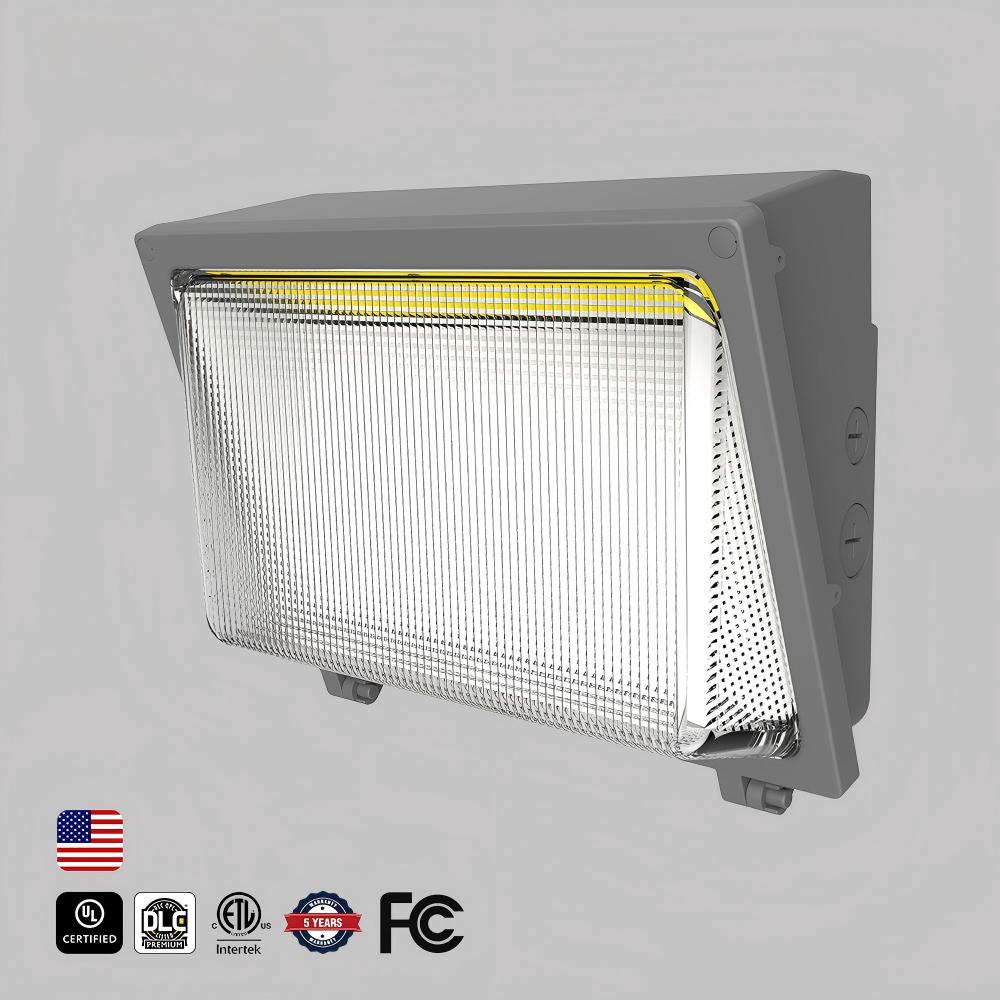
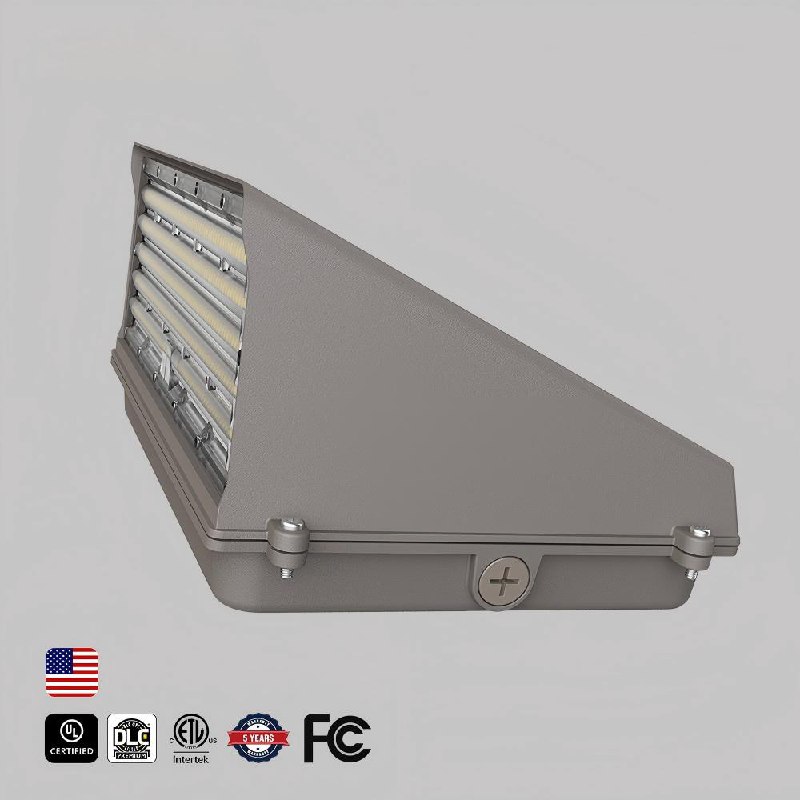
LED wall pack light for commercial security lighting

High-efficacy wall pack fixtures are often selected for perimeter and security lighting around commercial buildings.

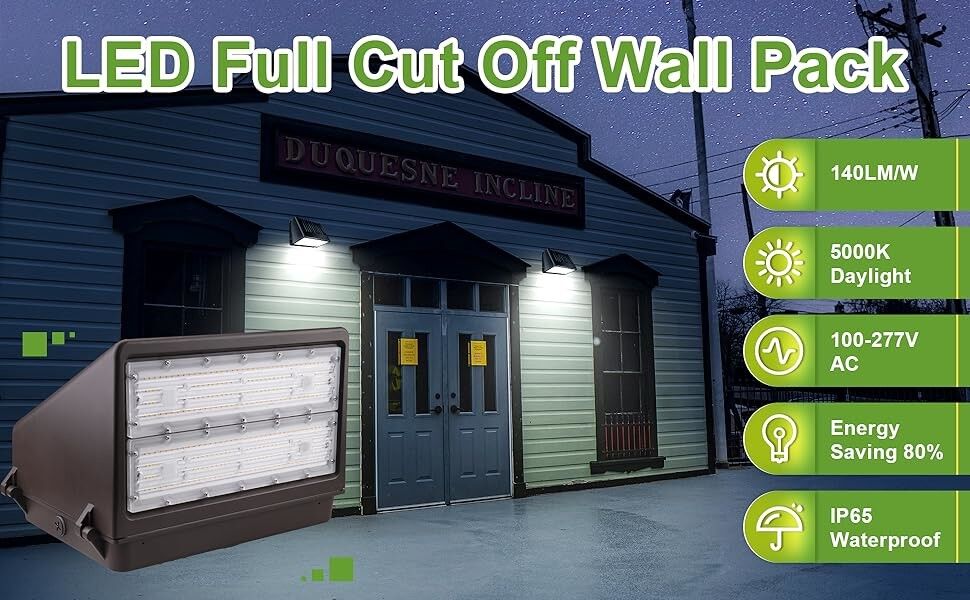
Wall pack light specifications for commercial exterior projects

Specification details like wattage range, CCT selection, and optical design matter more than just price.

What Wattage Wall Pack Light Do I Need?

The right wattage depends on mounting height, fixture spacing, and target light levels. A small rear door does not need the same wattage as a wide warehouse perimeter.

Mounting Height Common Wattage Typical Use
8-10 ft 20W-40W doors, walkways, narrow service areas
10-14 ft 40W-80W standard commercial walls, rear access zones
14-20 ft 80W-120W industrial perimeter, loading docks, wide building sides

As a starting point, most commercial projects fall in the 20W-120W range. If you need higher efficiency, HAROLUX also offers options like the LED Wall Pack Light SS-WK08 Series.

What Mounting Height Is Best for Wall Pack Lights?

Most wall packs are installed between 8 and 20 feet. Lower mounting heights work for pedestrian walkways and side entrances, while higher mounting heights are more common on warehouse and industrial walls.

If the mounting height is too high for the optical design, you lose useful brightness on the ground. If it is too low with too much wattage, glare becomes a problem.

What Is a Full Cutoff Wall Pack Light?

A full cutoff wall pack light is designed to send light downward while reducing uplight and glare. This is useful for hotels, schools, apartment buildings, and projects that need better visual comfort or dark-sky-friendly performance.

Projects that care about cutoff control often lean toward fixtures like the LED Wall Pack Light SS-WK07 Series, which is aimed at full-cutoff commercial exterior lighting applications.

What Certifications Matter for Commercial Wall Pack Lights?

For B2B buyers, certification is not a nice extra. It is often a hard filter.

  • UL or ETL listing for project confidence and code compliance
  • DLC qualification when utility rebate eligibility matters
  • IP65 or better for outdoor weather resistance
  • Wet-location suitability for exposed building exteriors

For many commercial jobs, buyers check certification before they even compare pricing.

What Color Temperature Is Best for LED Wall Pack Lights?

The most common choices are 3000K, 4000K, and 5000K.

  • 3000K: warmer look for hospitality and mixed-use sites
  • 4000K: balanced appearance for many commercial exteriors
  • 5000K: crisp visibility for industrial and security lighting

For security-driven projects, 5000K is still common. For more balanced commercial appearance, 4000K is often easier to live with.

How Far Apart Should Wall Pack Lights Be Spaced?

A practical starting point is around 1 to 1.5 times the mounting height, then refine based on beam distribution and light level requirements.

For example, at a mounting height of 12 ft, spacing might begin around 12-18 ft. Final spacing should still be checked against the project layout and target foot-candle levels.

Related Wall Pack Resources

Frequently Asked Questions

What is a wall pack light?

A wall pack light is an exterior-mounted fixture used for perimeter, security, walkway, and entrance lighting on commercial and industrial buildings.

What wattage wall pack light should I use?

Most commercial projects use 20W-120W, depending on mounting height, spacing, and target brightness. Lower heights need less wattage. Higher industrial walls usually need more.

What is a full cutoff wall pack light?

A full cutoff wall pack directs light downward to reduce uplight and glare. It is often preferred for hospitality, school, dark-sky-sensitive, and compliance-driven projects.

Is IP65 enough for outdoor wall pack lights?

Yes. IP65 is the common minimum for outdoor commercial wall pack lights because it protects against dust and water jets in standard exterior conditions.

What color temperature is best for wall pack lights?

4000K and 5000K are the most common. 5000K is popular for industrial visibility, while 4000K often gives a more balanced commercial appearance.

How high should wall pack lights be mounted?

Most wall pack fixtures are installed between 8 and 20 feet, depending on application and optical design.

Are LED wall pack lights good for warehouses?

Yes. They are widely used for warehouse exterior walls, loading docks, and perimeter security zones because they combine durability, efficiency, and controlled light distribution.

Do wall pack lights need DLC certification?

Not always, but DLC matters when rebate eligibility is part of the project economics.

Need Help Choosing the Right Wall Pack?

If you are sourcing commercial LED wall pack lights for a warehouse, retail building, school, or hospitality project, HAROLUX can help with model selection, OEM/ODM support, and factory-direct quotations.

Contact HAROLUX for a Quote or browse the LED Wall Pack Lights Manufacturer page for more options.

Harolux T9 LED Freezer Light
Harolux T9 Series LED Freezer Light – -40°C rated, IP65 waterproof

Written by: Harolux Engineering Team | Updated: May 2026 | Reviewed by: Cold Storage Lighting Specialists

Quick Answer: LED freezer lights rated for -40°C operation deliver 50% energy savings compared to fluorescent tubes, with 50,000+ hour lifespan eliminating frequent bulb changes in cold environments. Standard LED lights fail in freezers due to driver degradation and condensation.

Table of Contents

  1. Why Standard LED Lights Fail in Freezers
  2. LED Freezer Light Specifications
  3. Cold Storage Lighting Standards
  4. Energy Savings: LED vs Fluorescent
  5. Installation Guide
  6. Frequently Asked Questions
  7. Product Recommendation

1. Why Standard LED Lights Fail in Freezers

Standard LED lights are NOT suitable for freezer environments:

Driver Failure at -40°C

  • Capacitor electrolyte freezes, reducing capacity by 80%+
  • Lifespan drops from 50,000 to <5,000 hours
  • Startup fails or produces unstable output

Condensation Damage

  • Warm air condenses on cold fixtures when doors open
  • Water penetrates IP20/IP40 housings
  • Corrosion, short circuits, mold growth
Issue Standard LED Freezer-Rated LED
Startup at -40°C Fails/flickers Instant start
Light output 30-50% reduction Stable
Lifespan at -40°C <5,000 hrs 50,000+ hrs
Warranty Voided Covered

2. LED Freezer Light Specifications

Minimum Requirements

  • Operating Temperature: -40°C to +25°C
  • Driver Rating: Cold-rated capacitors
  • Housing: IP65+ waterproof
  • Certifications: UL/ETL, DLC, FDA-compliant

Harolux T9 Series Specifications

Model Length Wattage Lumens
T9-4FT 4ft 18W 2,700 lm
T9-5FT 5ft 22W 3,300 lm
T9-6FT 6ft 27W 4,050 lm
T9-8FT 8ft 54W 8,100 lm

Efficacy: 150 LPW | IP65 | UL/ETL/DLC | 5-year warranty

3. Cold Storage Lighting Standards

Application Temperature Lux
Walk-in Freezers -40°C to -20°C 200-300
Frozen Food Storage -25°C to -15°C 300-400
Cold Storage Warehouses -10°C to 0°C 300-500
Display Cases 0°C to +5°C 500-1000

4. Energy Savings: LED vs Fluorescent

Metric Fluorescent T8 LED T9
Wattage 32W 18W
Output at -40°C 1,960 lm (30% loss) 2,700 lm
Lifespan 10,000 hrs 50,000 hrs
Annual Cost (20 fixtures) $2,516 $1,000
5-Year Total $13,080 $6,200

5-Year Savings: $6,880 (53%)

5. Installation Guide

Fixture Placement

  • Center over storage aisles
  • 12-inch clearance from walls
  • Every 8-10 feet along aisle
  • Avoid above freezer doors

Safety Checklist

  1. ✅ -40°C rated fixtures
  2. ✅ IP65+ waterproof
  3. ✅ UL/ETL certification
  4. ✅ Shatter-resistant lens
  5. ✅ Vapor-sealed junction boxes

6. Frequently Asked Questions

Q: Can I use regular LED lights in a freezer?

A: NO. Standard LEDs fail within 6-12 months. Driver capacitors freeze, causing startup failure.

Q: What temperature range do freezer LEDs support?

A: -40°C to +25°C, covering walk-in freezers, frozen storage, and refrigerated areas.

Q: Why do fluorescent lights dim in freezers?

A: Mercury vapor condenses at -40°C, reducing arc efficiency by 30-50%.

Q: How often do LED freezer lights need replacement?

A: 50,000+ hours = 5+ years in 24/7 operation.

7. Product Recommendation

Harolux T9 Series LED Freezer Light

  • ✅ -40°C Rated Operation
  • ✅ 150 LM/W Efficacy
  • ✅ IP65 Waterproof
  • ✅ UL/ETL/DLC Certified
  • ✅ Shatter-Resistant Lens
  • ✅ 5-Year Cold Storage Warranty

View LED Freezer Lights & Request Quote →

About Harolux

Professional LED manufacturer since 2010. UL/ETL/DLC certified. 5-year warranty covering cold storage operation.

Request Lighting Design →

LED Stadium Lighting Professional Sports Facility
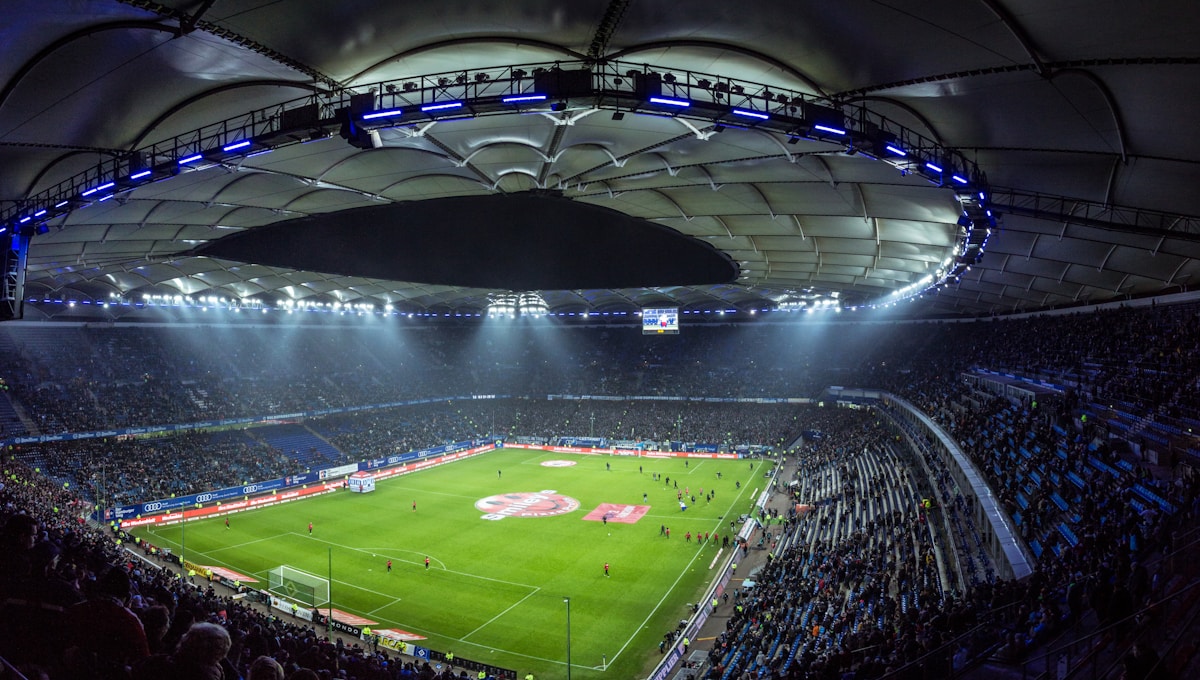
LED stadium lights deliver 140+ LPW efficacy for professional sports facilities

Written by: Harolux Engineering Team | Updated: May 2026 | Reviewed by: LED Lighting Specialists with 15+ Years Experience

Quick Answer: LED stadium lighting delivers 60-70% energy savings compared to metal halide systems, with 50,000+ hour lifespan and 140+ lumens/watt efficacy. For a standard soccer field requiring 500 lux, you need approximately 42-48 fixtures (600W each) costing $38,000+ annually in energy savings.

Modern LED stadium lighting provides uniform, flicker-free illumination for professional sports broadcasting.

Table of Contents

  1. Why LED Stadium Lights Outperform Traditional Lighting
  2. Stadium Lighting Standards by Sport Level
  3. How to Calculate Stadium Lighting Requirements
  4. LED Stadium Light Specifications & Selection Guide
  5. Cost Analysis: LED vs Metal Halide
  6. Installation Best Practices
  7. Frequently Asked Questions
  8. Product Recommendation

1. Why LED Stadium Lights Outperform Traditional Lighting

LED stadium lights have become the standard for sports field illumination, replacing metal halide and halogen systems across professional, collegiate, and recreational facilities. Here’s why:

Energy Efficiency: 140+ Lumens Per Watt

LED stadium fixtures deliver 140-160 lumens per watt, compared to metal halide’s 80-100 LPW. This translates to:

  • 60% lower energy consumption for equivalent brightness
  • $38,000+ annual savings for a typical stadium (based on 150,000W to 65,000W reduction)
  • Reduced cooling load – LEDs generate less heat

LED stadium lighting uses 60% less energy while delivering superior brightness.

Lifespan: 50,000+ Hours vs 10,000 Hours

Lighting Type Rated Lifespan Replacement Frequency
Metal Halide 10,000-15,000 hrs Every 2-3 years
High-Pressure Sodium 15,000-24,000 hrs Every 3-4 years
LED Stadium 50,000-100,000 hrs Every 15-20 years

Key Insight: LED fixtures eliminate the labor costs and event disruptions of frequent bulb replacements.

Instant On/Off & Controllability

LED stadium lights reach full brightness in 0.1 seconds, eliminating the 5-10 minute warm-up time of metal halide. This enables:

  • Dynamic lighting for multi-purpose events
  • Instant blackout effects for entertainment
  • Automated scheduling with photocell/DMX controls

Superior Light Quality for Broadcasting

Modern LED stadium lights feature:

  • CRI >80 for accurate color rendering
  • Flicker-free operation for slow-motion footage
  • 4000K-5700K color temperature matching broadcast standards

2. Stadium Lighting Standards by Sport Level

Professional sports organizations and broadcasting companies require specific illuminance levels:

Illuminance Requirements Table

Sport Level Vertical Lux Horizontal Lux Uniformity Ratio
International Competition (FIFA/UEFA) 1,500-2,000 2,000-2,500 < 1.3
National Competition (MLS/NFL) 1,000-1,500 1,500-2,000 < 1.5
Regional/Collegiate 500-750 750-1,000 < 1.7
Training/Recreational 200-300 300-500 < 2.0

Source: IESNA (Illuminating Engineering Society) Sports Lighting Standards

Sport-Specific Requirements

Football/Soccer Stadium Lighting:

  • Standard field: 105m × 68m = 7,140 m²
  • Professional match: 2,000 lux = 14,280,000 lumens required
  • Training session: 300 lux = 2,142,000 lumens required

Baseball Field Lighting:

  • Infield: 1,000+ lux for professional games
  • Outfield: 700-1,000 lux
  • Batting practice: 300-500 lux

Tennis Court Lighting:

  • Professional: 750-1,000 lux
  • Recreational: 300-500 lux
  • Uniformity critical for ball visibility

Track & Field:

  • Sprint lanes: 500-750 lux
  • Field events: 300-500 lux
  • Broadcast quality: 1,000+ lux

3. How to Calculate Stadium Lighting Requirements

Follow this step-by-step calculation to determine your lighting needs:

Step 1: Measure Field Area

Calculate your field dimensions:

  • Soccer: 105m × 68m = 7,140 m²
  • Football (American): 110m × 49m = 5,390 m²
  • Baseball (full field): ~10,000 m²

Step 2: Determine Target Lux Level

Based on your sport level (see Section 2):

  • Professional: 2,000 lux
  • Regional: 750 lux
  • Training: 300 lux

Step 3: Calculate Total Lumens Required

Formula: Field Area × Target Lux = Total Lumens

Example: Soccer field at 500 lux
7,140 m² × 500 lux = 3,570,000 lumens

Step 4: Select Fixture Wattage & Output

For 140 LPW efficacy:

  • 300W fixture = 42,000 lumens
  • 600W fixture = 84,000 lumens
  • 1200W fixture = 168,000 lumens

Step 5: Calculate Number of Fixtures

Formula: Total Lumens ÷ Fixture Lumens = Fixture Count

Example: Using 600W fixtures
3,570,000 ÷ 84,000 = 42.5 fixtures

Add 10-15% buffer for uniformity: 46-48 fixtures

Step 6: Determine Pole Configuration

Field Size Recommended Poles Pole Height
Small (training) 4 poles 12-15m
Medium (regional) 6 poles 15-20m
Large (professional) 8-12 poles 20-25m

4. LED Stadium Light Specifications & Selection Guide

Key Specifications to Consider

Wattage Options:

  • 300W-600W: Small fields, training facilities
  • 600W-900W: Regional competition, collegiate
  • 900W-1200W: Professional stadiums, broadcast quality

Color Temperature:

  • 3000K: Warm white, comfortable for spectators
  • 4000K: Neutral white, balanced for general use
  • 5000K-5700K: Cool white, optimal for broadcast cameras

Beam Angle:

  • 60°-90°: Wide distribution for uniform coverage
  • 30°-60°: Narrow beam for long throw distances

Certifications:

  • UL/ETL: North American safety certification
  • DLC: Efficiency qualification for utility rebates
  • IP65/IP66: Weatherproof for outdoor installation

Harolux SS-SR04 LED Stadium Light Series

Product Highlights:

  • Wattage: 300W to 1,200W (selectable)
  • Efficacy: 140 lumens/watt
  • Color Temperature: 3000K/4000K/5000K selectable
  • IP65 waterproof rating
  • UL/ETL/DLC certified
  • 5-year warranty

Applications:

  • Football/soccer stadiums
  • Baseball fields
  • Tennis courts
  • Track & field facilities
  • Multi-purpose sports complexes

View Harolux SS-SR04 LED Stadium Lights →

5. Cost Analysis: LED vs Metal Halide

Energy Cost Comparison (Standard Stadium)

Metric Metal Halide LED Stadium Savings
Total Wattage 150,000W 65,000W 57% reduction
Annual Hours 3,000 hrs 3,000 hrs
Energy Rate $0.12/kWh $0.12/kWh
Annual Energy Cost $54,000 $23,400 $30,600

Maintenance Cost Comparison

Item Metal Halide LED Stadium
Bulb Replacement $5,000/year $0
Labor Costs $3,000/year $500/year
Cleaning $500/year $500/year
Annual Maintenance $8,500 $1,000

Total 5-Year Operating Cost

System Energy Maintenance Total 5-Year
Metal Halide $270,000 $42,500 $312,500
LED Stadium $117,000 $5,000 $122,000

Total 5-Year Savings: $190,500

ROI Calculation

  • LED stadium lighting upgrade cost: ~$150,000-200,000
  • Annual savings: $38,100
  • Payback period: 4-5 years
  • 20-year total savings: $500,000+

6. Installation Best Practices

Pole Placement & Aiming

Optimal Aiming Angles:

  • 15-25° downward tilt for uniform coverage
  • Avoid angles >30° to minimize glare

Fixture Distribution:

  • Overlap coverage zones by 10-15%
  • Position fixtures to eliminate dark spots
  • Consider spectator sight lines

Electrical Requirements

Power Supply:

  • 208V-480V three-phase for large installations
  • 120V-277V for smaller facilities
  • Dedicated circuits per pole group

Control Systems:

  • 0-10V dimming for energy management
  • DMX512 for entertainment lighting
  • Photocell for automated on/off

Safety Considerations

  1. Ensure proper pole mounting (wind load rating)
  2. Use weatherproof junction boxes
  3. Install surge protection
  4. Maintain clearance from player areas
  5. Follow local electrical codes

7. Frequently Asked Questions

Q: How long do LED stadium lights last?

A: LED stadium lights have a rated lifespan of 50,000-100,000 hours. At typical usage of 3,000 hours per year (8 hours/day, 375 days), this translates to 17-33 years before replacement.

Q: Are LED stadium lights suitable for HDTV broadcasting?

A: Yes. Quality LED stadium lights with CRI >80 and flicker-free drivers are ideal for broadcast applications. The 5000K-5700K color temperature matches camera requirements, and flicker-free operation ensures smooth slow-motion footage.

Q: How many LED stadium lights do I need for a soccer field?

A: For a standard 105m × 68m soccer field:

  • Training (300 lux): ~15-20 fixtures (300W-600W)
  • Regional (750 lux): ~30-35 fixtures (600W)
  • Professional (2000 lux): ~80-100 fixtures (900W-1200W)

Q: What is the difference between horizontal and vertical lux?

A:

  • Horizontal lux measures light on the ground surface (playing field)
  • Vertical lux measures light at 1.5m height (for player visibility and broadcast cameras)
  • Professional broadcasts require both metrics to be met

Q: Do LED stadium lights work in cold weather?

A: Yes. LED lights perform well in cold environments, rated for -30°C to +50°C operation. Unlike metal halide, LEDs have no warm-up issues in cold temperatures.

Q: Can LED stadium lights be dimmed?

A: Most LED stadium lights support 0-10V or DMX dimming for flexible lighting control. Dimming reduces energy consumption during non-event periods.

Q: What certifications should LED stadium lights have?

A:

  • UL/ETL – Safety certification (required in North America)
  • DLC – DesignLights Consortium qualification (for utility rebates)
  • IP65/66 – Weatherproof rating
  • CE/RoHS – International compliance

Q: How much do LED stadium lights cost?

A:

  • Fixture cost: $300-800 per unit (300W-1200W)
  • Installation cost: $50,000-150,000 (depends on pole count)
  • Total project: $150,000-500,000 for professional stadium

Q: What is stadium lighting uniformity ratio?

A: Uniformity ratio = Maximum Lux ÷ Minimum Lux. Lower ratios indicate more even distribution:

  • Broadcast quality: < 1.3
  • Professional: < 1.5
  • Recreational: < 2.0

Q: How do I calculate LED stadium lighting ROI?

A:

  1. Calculate annual energy savings (old wattage – new wattage × hours × rate)
  2. Add maintenance savings
  3. Divide total upgrade cost by annual savings
  4. Typical payback: 4-5 years

8. Product Recommendation

Harolux SS-SR04 Series LED Stadium Light

Why Choose Harolux SS-SR04:

  • 140 LM/W High Efficacy – Maximum brightness with minimum energy
  • Selectable Wattage 300W-1200W – One fixture covers all applications
  • 3000K/4000K/5000K CCT – Flexible color temperature
  • IP65 Waterproof – Dust-tight, water jet protected
  • UL/ETL/DLC Certified – Safety & rebate qualified
  • 5-Year Warranty – Long-term reliability guarantee

Technical Specifications

Model Wattage Range Lumens Weight Beam Angle
SS-SR04-300 300W 42,000 8.5kg 60°-90°
SS-SR04-600 600W 84,000 12kg 60°-90°
SS-SR04-900 900W 126,000 15kg 30°-60°
SS-SR04-1200 1200W 168,000 18kg 30°-60°

Get Custom Quote: Request Pricing for Your Stadium Project →

Summary: LED Stadium Lighting Key Facts

Metric LED Stadium Metal Halide
Efficacy 140-160 LPW 80-100 LPW
Lifespan 50,000+ hrs 10,000 hrs
Energy Savings 60% Baseline
Annual Cost (standard stadium) $23,400 $54,000
Warm-up Time 0.1 seconds 5-10 minutes
CRI >80 65-70
Maintenance Minimal Frequent bulb changes

About Harolux

Harolux is a professional LED lighting manufacturer based in Guangdong, China since 2010. We specialize in commercial and industrial LED lighting with UL, ETL, DLC, CE, and RoHS certifications.

Our Credentials:

  • 15+ years in LED lighting manufacturing
  • UL/ETL/DLC certified products
  • Projects in 50+ countries
  • 5-year warranty on all stadium lights

Contact: Request a Custom Lighting Design →

Last Updated: May 2026

Related Guides:


LED Wall Pack Lights for Commercial Security

LED wall pack lights are essential fixtures for commercial building exterior lighting, providing security, safety, and architectural accent illumination. These versatile outdoor lighting fixtures mount directly to building walls and project light outward to illuminate perimeters, walkways, and entry points.

What Are LED Wall Pack Lights?

Wall pack lights are outdoor lighting fixtures designed for mounting on building walls. They project light outward and downward to illuminate areas around commercial buildings, providing security lighting for parking lots, walkways, building entrances, and loading docks.

📊 Key Benefits of LED Wall Packs

  • 💰 Energy Savings: 50-70% reduction compared to MH/HPS
  • ⏰ Long Lifespan: 50,000+ hours maintenance-free
  • ⚡ Instant On/Off: No warm-up, sensor compatible
  • 🌧️ Durability: IP65 rated for all weather
  • 🔒 Security: Bright illumination deters crime
  • 🔧 Low Maintenance: No bulb changes for 10+ years

Types of LED Wall Pack Lights

🔷 Full Cutoff

All light directed downward. Required for Dark Sky compliance.

Best for: Residential areas, Dark Sky zones

🔷 Semi-Cutoff

Some light upward. Balance of coverage and control.

Best for: General commercial use

🔷 Forward Throw

Light projected away from building at an angle.

Best for: Walkways, parking edges

🔷 Architectural

Decorative design with functional lighting.

Best for: Hotels, restaurants, retail

Recommended LED Wall Pack Lights

HAROLUX offers a complete range of LED wall packs for commercial security lighting:

Model Wattage Lumens Features
SS-WK07 20W-100W 2,800-14,000 lm Full Cutoff, Dark Sky
SS-WK08 20W-120W 2,800-16,800 lm 140 lm/W, High Efficiency
SS-WK06 40W-120W 5,600-16,800 lm Selectable Wattage/CCT
Slim Series 25W-60W 3,500-8,400 lm Low Profile, Modern

LED Wall Pack Light Specifications

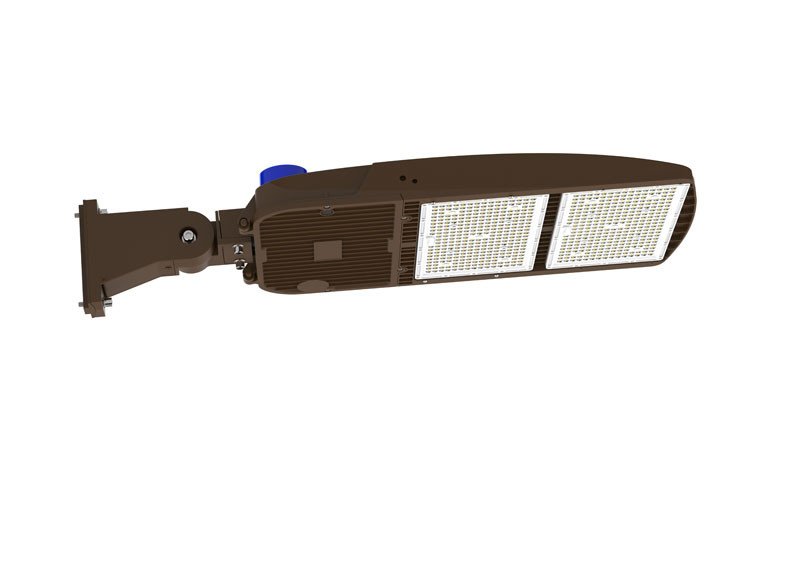
HAROLUX SS-WK08 High Efficiency Wall Pack – 140 lm/W


Wall Pack Lighting Applications

For projects that combine wall packs with shoebox, canopy or high bay fixtures, HAROLUX offers factory-direct commercial LED lighting for B2B buyers.

🏢 Building Perimeter

100-150W full cutoff at 20-30 ft spacing

🚗 Garage Entrances

50-100W above doors and drive lanes

🚪 Building Entrances

Required at every door for code compliance

🚛 Loading Docks

150-200W for safe night operations

📐 Light Level Recommendations

Application Foot-Candles Fixture Spacing
Building Perimeter 0.5-1.0 fc 50-75W 25-35 ft
High Security 2.0-5.0 fc 100-150W 15-20 ft
Building Entrances 5.0-10.0 fc 50-100W Per door
Loading Docks 10.0-20.0 fc 150-200W Per bay

💰 Energy Savings Calculator

Converting from 175W MH to 50W LED:

⚡ Energy Savings: 71%
💵 Annual Cost: $460 → $130/year
📅 Payback: 1.5-2 years
🔧 Maintenance: $100+/year saved

*Based on 10 fixtures, $0.12/kWh, 12 hrs/day

🌙 Dark Sky Compliance

Why Dark Sky Matters

  • ✅ No upward light pollution
  • ✅ Reduces glare and light trespass
  • ✅ Preserves night sky visibility
  • ✅ Protects wildlife ecosystems

HAROLUX SS-WK06/07 are Dark Sky compliant.


❓ Wall Pack Lighting FAQ

What wattage do I need?

General perimeter: 50-75W. High-security: 100-150W.

Are they waterproof?

Yes, IP65 rated – protected against dust and water jets.

Do they include photocells?

SS-WK07 includes integrated photocell for dusk-to-dawn operation.

🔗 Related Products

📞 Get a Free Security Lighting Design

Free Photometric Analysis

Our engineering team provides complimentary lighting layouts for your project.

Contact HAROLUX →

Last updated: March 2026

LED Shoebox Lights for Parking Lot

Parking lot lighting is essential for commercial properties, providing safety, security, and visibility for customers and employees. LED parking lot lights have revolutionized outdoor area lighting with their superior energy efficiency, long lifespan, and excellent light quality.

Why LED Parking Lot Lights?

LED shoebox lights and area lights are the modern standard for parking lot illumination. Compared to traditional metal halide or high-pressure sodium fixtures, LED parking lot lights offer:

📊 LED Parking Lot Lighting Benefits

  • 💰 Energy Savings: 50-70% reduction in energy costs
  • ⏰ Long Lifespan: 50,000-100,000 hours of operation
  • ⚡ Instant On/Off: No warm-up time, ideal for motion sensors
  • 👁️ Better Visibility: 70+ CRI for improved security
  • 🔧 Low Maintenance: Fewer bulb replacements
  • 🌿 Eco-Friendly: Less light pollution

Types of Parking Lot Lights

1. Shoebox Lights

Rectangular fixtures mounted on poles for wide, even illumination.

Best for: Large parking lots, shopping centers

2. Post Top Lights

Decorative fixtures combining functionality with aesthetics.

Best for: Pedestrian areas, retail centers

3. Garage Lights

Vapor tight fixtures for covered parking structures.

Best for: Parking garages, underground lots

Recommended LED Parking Lot Lights

HAROLUX offers high-performance LED shoebox lights for commercial parking lots:

Model Wattage Lumens Coverage
SS-AR07-100 100W 14,000 lm ~4,000 sq ft
SS-AR07-200 200W 28,000 lm ~8,000 sq ft
SS-AR07-300 300W 42,000 lm ~12,000 sq ft
SS-AR07-400 400W 56,000 lm ~16,000 sq ft

LED Shoebox Light Specifications


Parking Lot Lighting Design Guide

📐 Recommended Light Levels (IESNA)

Parking Type Min (fc) Avg (fc) Uniformity
Basic Parking 0.2 fc 0.5 fc 4:1
Standard Commercial 0.5 fc 1.0 fc 3:1
Shopping Centers 1.0 fc 2.0 fc 3:1
High Security 2.0 fc 5.0 fc 2:1

📏 Pole Height & Spacing

  • 12-15 ft poles: Small lots, 150W fixtures
  • 20-25 ft poles: Commercial lots, 200-300W fixtures
  • 30-40 ft poles: Large lots, 400W+ fixtures
  • Spacing rule: 4-5x pole height between fixtures

💰 Energy Savings Calculator

Converting from 400W MH to 150W LED:

⚡ Energy Savings: 62.5%
💵 Annual Cost: $1,750 → $650/year
📅 Payback: 2-3 years
🔧 Maintenance: $500+/year saved

*Based on 10 fixtures, $0.12/kWh, 12 hrs/day

Parking Lot Lighting Applications

🛒 Shopping Centers

Bright, uniform lighting to attract customers

🏢 Office Buildings

Employee safety during early/late hours

🏨 Hotels

24/7 illumination for guest safety

🏥 Healthcare

Highest light levels for emergency access


❓ Parking Lot Lighting FAQ

How many lights do I need?

Rule of thumb: one 200W LED per 4,000-6,000 sq ft. Contact us for free photometric analysis.

Best color temperature?

4000K for commercial, 5000K for high-security areas.

Are they Dark Sky compliant?

Yes, many HAROLUX shoebox lights feature full cutoff optics.

🔗 Related Products

📞 Get a Free Lighting Design

Free Photometric Analysis

Our team provides complimentary lighting layouts for your parking lot project.

Contact HAROLUX →

Last updated: March 2026

Vapor tight LED lights are essential lighting solutions for harsh environments where moisture, dust, and extreme conditions are present. This guide covers the best applications for vapor tight fixtures and how to choose the right one for your specific needs.

What Are Vapor Tight LED Lights?

Vapor tight lights, also known as vapor proof or sealed fixtures, are designed to prevent moisture, dust, and contaminants from entering the housing. With IP65 or higher ratings, these fixtures are ideal for wet locations and harsh industrial environments.

Key Features of Vapor Tight Fixtures

  • IP65/IP66 Rating: Complete protection against dust and water jets
  • Sealed Housing: Prevents moisture ingress and corrosion
  • Wide Temperature Range: Operates in extreme hot and cold conditions
  • Impact Resistant: Durable construction for industrial use
  • NSF Certified Options: Food-safe for processing facilities

Applications for Vapor Tight LED Lights

1. Car Wash Lighting

Car wash facilities require lighting that can withstand constant water exposure, chemicals, and humidity. Vapor tight LED lights are the ideal solution for:

  • Self-serve wash bays
  • Automatic tunnel washes
  • Vacuum stations
  • Equipment rooms

Recommended: HAROLUX VT Series Vapor Tight Lights with IP65 rating for continuous water exposure.

2. Parking Garage Lighting

Underground and covered parking structures face moisture, exhaust fumes, and temperature fluctuations. Vapor tight fixtures provide reliable illumination with minimal maintenance.

  • Underground parking levels
  • Covered parking structures
  • Entry and exit ramps
  • Stairwells and elevators

Benefits: Reduced maintenance costs, uniform illumination, long lifespan in damp conditions.

3. Food Processing Lighting

Food processing and beverage production facilities require lighting that meets strict hygiene standards. NSF-certified vapor tight lights prevent contamination and withstand washdown procedures.

  • Meat and poultry processing
  • Dairy production
  • Beverage bottling
  • Commercial kitchens

Requirements: NSF certification, IP66+ rating, chemical resistance for cleaning agents.

4. Parking Lot and Carport Lighting

Outdoor covered areas like parking lots and carports benefit from weather-resistant vapor tight fixtures that can handle rain, snow, and temperature extremes.

  • Apartment complex carports
  • Shopping center parking
  • Commercial building entrances
  • Drive-through lanes

5. Industrial and Warehouse Lighting

Manufacturing facilities, warehouses, and industrial plants often have areas with dust, humidity, or chemical exposure. Vapor tight lights provide reliable illumination in these challenging environments.

  • Manufacturing floors
  • Chemical storage areas
  • Loading docks
  • Equipment maintenance areas

6. Agriculture and Livestock Lighting

Barns, greenhouses, and agricultural facilities require lighting that can handle dust, humidity, and ammonia exposure from animal waste.

  • Livestock barns
  • Poultry houses
  • Greenhouses
  • Milking parlors

Vapor Tight Light Selection Guide

Application IP Rating Needed Wattage Range Special Requirements
Car Wash IP65+ 25-60W Chemical resistant
Parking Garage IP65 35-60W Linkable design
Food Processing IP66+ 35-50W NSF certified
Industrial IP65 40-100W Dust resistant
Agriculture IP65+ 35-60W Ammonia resistant

Why Choose HAROLUX Vapor Tight Lights?

The HAROLUX VT Series offers:

  • IP65 Waterproof Rating: Protected against water jets from any direction
  • Wattage Selectable: 25W/35W/45W options in a single fixture
  • Color Temperature Selectable: 3500K/4000K/5000K for different applications
  • Linkable Design: Connect multiple fixtures for continuous runs
  • 5-Year Warranty: Reliable performance backed by industry-leading warranty

Product Specifications

Model Wattage Lumens Length IP Rating
VT-25 25W 3,250 lm 2ft IP65
VT-35 35W 4,550 lm 4ft IP65
VT-45 45W 5,850 lm 4ft IP65

Related Products

For comprehensive lighting solutions in wet and harsh environments:

Get a Quote for Your Project

Whether you need lighting for a car wash, parking garage, or food processing facility, our team can help you select the right vapor tight solution. Contact HAROLUX for a free consultation.

Last updated: March 2026

LED Wall Pack FAQ

LED Wall Pack Frequently Asked Questions

What is an LED wall pack light?

An LED wall pack light is an outdoor lighting fixture designed to be mounted on building walls. It uses LED technology to provide efficient illumination for building perimeters, parking areas, loading docks, and security applications. LED wall packs typically replace older metal halide or high-pressure sodium fixtures.

How many watts do I need for a wall pack?

Wall pack wattage depends on mounting height and application. For 10-12 ft mounting, use 20-40W. For 12-16 ft, use 40-60W. For 16-24 ft, use 60-100W. For heights above 24 ft, consider 100-120W fixtures. Higher mounting requires more wattage to achieve the same ground-level illumination.

What is the difference between full cutoff and forward throw wall packs?

Full cutoff wall packs direct all light downward at or below 90 degrees, preventing light pollution and trespass. They’re required in dark-sky communities. Forward throw wall packs project light further from the building at angles above 90 degrees, providing wider coverage for parking areas and large perimeters.

How long do LED wall packs last?

Quality LED wall packs have a rated lifespan of 50,000+ hours. At 12 hours of daily operation, this translates to over 11 years of service. Unlike metal halide lamps that gradually dim over time, LEDs maintain consistent output throughout their lifespan.

Are LED wall packs waterproof?

Most commercial LED wall packs are rated IP65 or higher, meaning they’re dust-tight and protected against water jets. This makes them suitable for outdoor use in all weather conditions, including heavy rain, snow, and coastal environments with salt spray.

What color temperature should I choose?

For most commercial applications, 4000K (neutral white) provides balanced illumination. 5000K (daylight) offers higher visibility for security applications. 3000K (warm white) is suitable for residential-adjacent properties where light trespass is a concern.

Can LED wall packs be used with photocells?

Yes, most LED wall packs are compatible with photocells for automatic dusk-to-dawn operation. Many models include built-in photocells or have knockouts for external sensor installation. Photocell control can reduce energy consumption by ensuring lights only operate when needed.

How do I calculate energy savings from LED wall packs?

LED wall packs typically save 60-70% compared to metal halide fixtures. A 100W LED replacing a 250W metal halide saves approximately $157 per year at $0.12/kWh with 12-hour daily operation. Payback periods are typically 1-2 years for commercial installations.

What is a selectable CCT wall pack?

Selectable CCT wall packs allow you to choose between multiple color temperatures (typically 3000K, 4000K, 5000K) using an internal switch. This flexibility lets one fixture model serve different applications without ordering separate SKUs.

Do LED wall packs require maintenance?

LED wall packs require minimal maintenance compared to traditional fixtures. There are no bulbs to replace, and the solid-state construction is highly reliable. Occasional cleaning of the lens may be needed in dusty environments. Most manufacturers offer 5-year warranties.

What voltage do LED wall packs use?

Most commercial LED wall packs operate on 120-277V input, making them compatible with standard commercial electrical systems. Some models are also available in 347V or 480V for industrial applications. Always verify voltage compatibility before installation.

Can LED wall packs be dimmed?

Some LED wall pack models are dimmable using 0-10V dimming protocols. Dimming capability is useful for applications where light levels can be reduced during low-activity periods to save energy. Not all models support dimming – check specifications before purchasing.

What is the beam angle of a wall pack?

LED wall packs typically have beam angles of 100-120 degrees horizontal and 60-90 degrees vertical, creating a Type IV distribution pattern. This provides a forward-throw pattern ideal for illuminating areas away from the building wall.

How high should wall packs be mounted?

Wall packs are typically mounted at 10-25 ft above ground level. Lower mounting (10-15 ft) works for entrances and small areas. Medium mounting (15-20 ft) suits loading docks and garages. Higher mounting (20-25 ft) is used for building perimeters and parking areas.

What is the difference between LED wall packs and flood lights?

Wall packs are designed specifically for wall mounting with a fixed aiming angle, while flood lights offer adjustable aiming and can be mounted on poles or walls. Wall packs typically have a wider, more uniform distribution pattern for perimeter lighting, while flood lights provide focused, directional illumination.

Are LED wall packs dark-sky compliant?

Full cutoff LED wall packs are dark-sky compliant as they direct all light downward, preventing light pollution. Look for IDA (International Dark-Sky Association) certification or full cutoff designation if dark-sky compliance is required in your area.

Can LED wall packs be used in cold climates?

Yes, LED wall packs perform well in cold climates. Most are rated for operation down to -40°C (-40°F). Unlike fluorescent lights that lose efficiency in cold temperatures, LEDs actually perform slightly better in cooler conditions.

What certifications should I look for?

For commercial applications, look for UL or ETL listing for safety, DLC (DesignLights Consortium) qualification for utility rebates, and IP65 or higher for weather resistance. CE and RoHS certifications indicate compliance with European standards.

How do I choose between wall pack models?

Consider: (1) Required illumination level and mounting height, (2) Full cutoff vs. forward throw optics, (3) Energy efficiency (LM/W), (4) Color temperature needs, (5) Physical size and aesthetics, (6) Certifications required, (7) Budget and warranty.

Can wall packs be used for security camera lighting?

Yes, wall packs provide excellent illumination for security cameras. Use 5000K color temperature for best camera performance and facial recognition. Ensure even coverage without harsh shadows. Consider motion sensor integration for energy savings and to alert security when activity is detected.

What is the IP rating for outdoor wall packs?

IP65 is the minimum recommended rating for outdoor wall packs, providing dust-tight protection and resistance to water jets. IP66 and IP67 ratings offer even higher protection against heavy rain and temporary submersion, suitable for extreme weather environments.

How far apart should wall packs be spaced?

Space wall packs 1.5-2 times the mounting height apart. For example, at 15 ft mounting height, space fixtures 22-30 ft apart. Adjust spacing based on desired light levels and uniformity requirements. Overlap beam patterns by 20% for even coverage.

Can I retrofit existing wall pack housings with LED?

LED retrofit kits are available for converting existing wall pack housings to LED. These kits include an LED array and driver that fit into the existing housing. However, new LED wall packs often provide better thermal management and longer lifespan than retrofits.

What warranty do LED wall packs have?

Quality commercial LED wall packs typically come with 5-year warranties from reputable manufacturers. Some premium models offer 7-10 year warranties. Check warranty terms carefully – they may vary based on operating hours and environmental conditions.

Where can I buy commercial LED wall packs?

Commercial LED wall packs are available from lighting distributors, electrical wholesalers, and directly from manufacturers like HAROLUX. For commercial projects, contact HAROLUX for factory-direct pricing and technical support.

Related Products

Published: March 2026

LED Wall Pack Light Guide

What is an LED Wall Pack Light?

LED wall pack lights are outdoor lighting fixtures mounted on building walls for perimeter, security, and area lighting. They replace traditional metal halide and high-pressure sodium fixtures with energy-efficient LED technology, delivering 60-70% energy savings while providing superior illumination.

LED Wall Pack Wattage Guide

Choose the right wattage based on your application and mounting height:

Wattage Lumens Mounting Height Application
20W-30W 2,600-3,900 LM 8-12 ft Small entrances, alcoves
40W-60W 5,200-8,400 LM 12-18 ft Loading docks, garages
80W-100W 10,400-14,000 LM 16-24 ft Building perimeters
120W 16,800 LM 18-28 ft Large parking areas

Types of LED Wall Packs

Full Cutoff Wall Packs

Full cutoff fixtures direct all light downward, preventing light trespass and reducing sky glow. Required in many municipalities with dark-sky ordinances. Best for properties near residential areas.

Forward Throw Wall Packs

Forward throw optics project light further from the building, ideal for parking areas and large perimeter applications where wider coverage is needed.

Slim Wall Packs

Low-profile design for applications with limited wall space or aesthetic requirements. Often used in commercial buildings where appearance matters.

LED Wall Pack Applications

Warehouse & Distribution Centers

Wall-mounted fixtures provide essential lighting for loading docks, entrances, and perimeter security. 60W-100W models suit most warehouse applications.

Parking Garages

Wall packs eliminate the need for ceiling penetrations and provide even illumination on driving surfaces. 40W-60W fixtures at 8-12 ft mounting work well for most garages.

Commercial Buildings

Building perimeter lighting enhances security and aesthetics. Full cutoff fixtures prevent light from spilling into neighboring properties.

Security Lighting

Bright, reliable illumination deters crime and improves surveillance camera performance. Consider 5000K color temperature for maximum visibility.

Installation Guidelines

Mounting Height

Install wall packs at 10-25 ft above ground level. Higher mounting requires higher wattage to achieve desired light levels at ground level.

Fixture Spacing

Space fixtures 1.5-2 times the mounting height apart for uniform coverage. For example, fixtures at 15 ft height should be spaced 22-30 ft apart.

Electrical Requirements

  • Input voltage: 120-277V (most commercial LED wall packs)
  • Dedicated circuit recommended for large installations
  • Consider photocell for dusk-to-dawn operation
  • Motion sensor integration for energy savings

LED vs. Metal Halide Comparison

Feature LED Metal Halide
Efficacy 130-140 LM/W 60-80 LM/W
Lifespan 50,000+ hrs 15,000-20,000 hrs
Warm-up Time Instant 5-10 minutes
Maintenance Minimal Regular bulb replacement
Energy Cost Low High

Related Products

Published: March 2026