
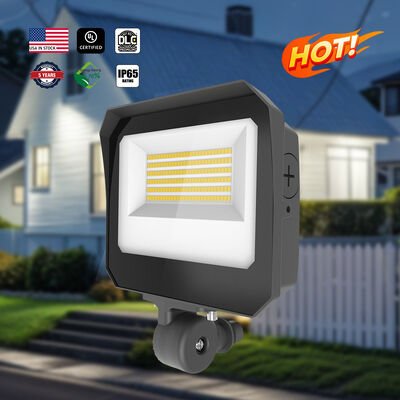
HAROLUX LED Flood Lights

Q: What is a LED flood light?

A: LED flood lights are directional outdoor lighting fixtures designed to illuminate large areas. They produce high-intensity light in a focused beam, making them ideal for building facades, parking lots, sports fields, and security lighting. Unlike area lights that emit 360°, flood lights can be aimed precisely where light is needed.

Q: How many watts do I need for outdoor flood lighting?

A: For small areas (under 5,000 sq ft), 100W-200W is usually sufficient. Medium areas (5,000-20,000 sq ft) need 200W-400W. Large areas (20,000+ sq ft) require 400W-1000W or multiple fixtures. A 300W LED flood light produces about 40,000-45,000 lumens, equivalent to a 1000W metal halide.

Q: What IP rating do I need for outdoor flood lights?

A: IP65 is the minimum for outdoor use—completely dust-tight and protected against water jets. IP66 is recommended for areas exposed to heavy rain or pressure washing. IP67 is necessary for flood-prone locations where temporary immersion may occur. Always verify the rating with a recognized testing lab.

Q: What color temperature is best for flood lighting?

A: 5000K-6000K is ideal for most commercial applications. It provides bright, daylight-like illumination that enhances visibility and security camera performance. 4000K is better for residential areas where harsh white light may cause complaints. Higher color temperatures improve security deterrence.

Q: How far can LED flood lights illuminate?

A: Beam angle determines throw distance. Narrow beam (15-30°) fixtures can illuminate effectively at 100+ feet for spotlighting. Wide beam (60-120°) fixtures cover larger areas closer to the fixture. A 300W narrow-beam flood light can light a flagpole from 200 feet away.

Q: Can LED flood lights replace metal halide?

A: Yes! LED flood lights are the standard replacement for metal halide. A 150W LED can replace 400W metal halide, and 300W LED replaces 1000W metal halide. Benefits include 60-70% energy savings, instant-on, no warm-up, and 50,000+ hour lifespan vs 20,000 for metal halide.

Q: How long do LED flood lights last?

A: Quality LED flood lights last 50,000-100,000 hours. At 12 hours daily operation, that’s 11-22 years. Unlike traditional bulbs, LEDs don’t fail suddenly—they gradually dim over time, giving advance warning. Proper heat dissipation is key to achieving rated lifespan.

Q: What’s the difference between flood light and spot light?

A: Flood lights have wide beam angles (60-120°) for area illumination. Spot lights have narrow beams (10-30°) for focused lighting on specific objects. Flood lights cover more area with softer edges; spot lights produce intense, concentrated illumination on smaller targets.

Q: How do I calculate how many flood lights I need?

A: Calculate required lumens: Area (sq ft) × Desired Foot-Candles. For a 10,000 sq ft parking lot needing 10 fc, you need 100,000 lumens. Using 300W fixtures (40,000 lm each), you need 2-3 fixtures. Add 10-20% for uniformity and overlap. Lighting software provides precise calculations.

Q: Do LED flood lights work in cold weather?

A: Yes! LEDs actually perform better in cold temperatures. Unlike metal halide that requires warm-up time and may not start in extreme cold, LEDs turn on instantly at any temperature. This makes them ideal for cold storage exteriors and northern climates.

Q: What beam angle should I choose?

A: Narrow (15-30°): Long-distance spotlighting, flags, monuments. Medium (30-60°): Building facades, signage, medium-throw applications. Wide (60-120°): Parking lots, large area coverage, security perimeters. Match beam angle to throw distance and coverage needs.

Q: Can LED flood lights be dimmed?

A: Some LED flood lights support dimming with 0-10V dimmers. Check product specifications. Dimming reduces energy use and extends fixture life. Not all fixtures are dimmable—verify before purchasing if dimming is needed.

Q: How do I install LED flood lights?

A: Common methods: Wall mount (use appropriate anchors), pole mount (slip fitter or trunnion), or ground/stake mount for landscape lighting. Use IP66 junction boxes, install surge protection, and ground all metal fixtures. For complex installations, hire a licensed electrician.

Q: What’s the difference between commercial and residential flood lights?

A: Commercial flood lights are larger (100W-1000W), produce more lumens, have higher IP ratings, and are built for 24/7 operation. Residential fixtures are smaller (10W-100W), designed for aesthetic lighting, and typically IP65 rated. Commercial fixtures cost more but last longer.

Q: Do LED flood lights require maintenance?

A: Minimal maintenance required. Clean lenses annually to maintain light output. Inspect seals and gaskets every 2-3 years. Check electrical connections periodically. No lamp replacements needed for 50,000+ hours. In harsh environments (coastal, industrial), more frequent inspection is advised.

Q: Are LED flood lights good for security cameras?

A: Yes! 5000K-6000K LED flood lights match security camera sensitivity curves for optimal image quality. Instant-on capability means immediate illumination when motion is detected. Even, shadow-free coverage improves camera effectiveness. Consider motion sensor integration.

Q: What’s the warranty on commercial LED flood lights?

A: Quality commercial LED flood lights come with 5-10 year warranties. The warranty should cover the LED array, driver, and housing. Check terms for exclusions. Longer warranty indicates manufacturer confidence in product durability.

Q: Can I mount flood lights upside down?

A: Some fixtures are rated for inverted mounting, but many are not. Check product specifications. Upside-down mounting can cause water accumulation and overheating. If inverted mounting is needed, choose fixtures specifically rated for it.

Q: How much does it cost to run LED flood lights?

A: A 300W LED flood light running 10 hours daily consumes 3 kWh. At $0.12/kWh, that’s $0.36/day or $131/year. Compared to a 1000W metal halide equivalent ($438/year), you save $307 annually per fixture. ROI is typically 1-3 years.

Q: What certifications should I look for?

A: UL or ETL listing for safety compliance. DLC certification for utility rebates. IP rating verified by a recognized lab. For Canada, CSA certification. FCC compliance for electromagnetic interference. Energy Star for additional efficiency verification.

相关产品:HAROLUX LED Flood Lights

HAROLUX LED Flood Lights

Commercial LED flood lights can reduce outdoor lighting energy costs by up to 70% while delivering superior illumination for security, safety, and aesthetics.

This comprehensive guide covers everything you need to know about selecting and installing LED flood lights for commercial applications, from parking lots and sports fields to building facades and security perimeters.

1. Understanding LED Flood Light Specifications

LED flood lights are directional lighting fixtures designed to illuminate large outdoor areas. Unlike area lights that provide 360-degree coverage, flood lights focus light in specific directions with adjustable angles. Key specifications include wattage (typically 50W-1000W for commercial applications), lumens (light output), beam angle (narrow 15-30° for spotlighting, wide 60-120° for area coverage), IP rating (weather protection), and color temperature. For commercial use, expect 120-150 lumens per watt efficiency from quality fixtures. A 300W LED flood light produces approximately 40,000-45,000 lumens, equivalent to a 1000W metal halide fixture. This dramatic efficiency gain is why LED flood lights have become the standard for new installations and retrofits.

  • 50W-1000W range for commercial applications
  • 120-150 lm/W efficiency from quality fixtures
  • Beam angles from 15° (spot) to 120° (wide flood)
  • IP65 minimum for outdoor use, IP66 for harsh environments
  • 300W LED = 1000W metal halide equivalent

2. Wattage and Lumens: Sizing Your Flood Lights

Proper sizing ensures adequate illumination without wasted energy. For building facades, calculate 5-15 lumens per square foot depending on desired brightness. Parking lots need 10-20 foot-candles (100-200 lux) for safety and security. Sports fields require 200-1500 lux depending on level of play. Here’s a sizing guide: **Small Areas** (under 5,000 sq ft): 100W-200W fixtures. **Medium Areas** (5,000-20,000 sq ft): 200W-400W fixtures. **Large Areas** (20,000+ sq ft): 400W-1000W fixtures or multiple smaller units. Always consider mounting height. Fixtures at 20 feet need 30% more lumens than fixtures at 15 feet for equivalent ground-level brightness. Use an IES file and lighting calculation software for precise planning on major installations.

  • Building facades: 5-15 lumens/sq ft
  • Parking lots: 100-200 lux for safety
  • Sports fields: 200-1500 lux by competition level
  • Higher mounting = more lumens needed
  • Use IES files for precise calculations

3. IP Ratings and Weather Protection

IP (Ingress Protection) ratings determine how well fixtures withstand environmental conditions. For outdoor flood lights, IP65 is the minimum acceptable rating, providing complete dust protection and resistance against water jets from any direction. IP66 offers stronger water jet protection, ideal for areas exposed to pressure washing or heavy rain. IP67 allows temporary immersion, necessary for flood-prone locations. Consider your climate: Coastal areas need marine-grade fixtures with enhanced corrosion resistance. Areas with extreme temperature swings require fixtures rated for the full expected range (-30°C to +50°C typical). Cold climates benefit from LED’s instant-on capability—no warm-up time in freezing temperatures unlike metal halide. UV-resistant lenses and housings prevent degradation in sunny climates.

  • IP65 minimum for outdoor applications
  • IP66 for pressure washing exposure
  • IP67 for flood-prone areas
  • Marine-grade for coastal installations
  • LED works instantly in cold weather

4. Beam Angle Selection and Light Distribution

Beam angle determines how light spreads from the fixture. **Narrow Beam (15-30°)** concentrates light for long-throw applications like flagpoles, monuments, or distant building features. Provides intense illumination on small areas from far away. **Medium Beam (30-60°)** balances throw distance and coverage. Ideal for general building facades, signage, and medium-distance applications. **Wide Beam (60-120°)** spreads light over large areas close to the fixture. Best for parking lots, loading docks, and area lighting. For uniform coverage, overlap beam patterns by 30-50%. Multiple fixtures with overlapping beams eliminate dark spots and create even illumination. Adjustable knuckles allow fine-tuning of aim angle after installation. Consider asymmetric distribution for perimeter lighting where light should project outward rather than backward toward the building.

  • Narrow (15-30°): Long throw, focused illumination
  • Medium (30-60°): General facade and signage
  • Wide (60-120°): Area and parking lot lighting
  • Overlap beams 30-50% for uniform coverage
  • Adjustable knuckles for precise aiming

5. Color Temperature and CRI Considerations

Color temperature significantly impacts visual perception and security. **4000K (Neutral White)** provides natural appearance, suitable for residential areas and mixed-use developments where harsh white light would cause complaints. **5000K (Daylight)** is the most popular choice for commercial and industrial applications. It enhances visibility, creates alert environments, and improves security camera performance. **6000K+ (Cool White)** delivers maximum brightness perception, ideal for security-focused applications where deterrence is the goal. For security cameras, 5000K-6000K matches camera sensitivity curves for best image quality. Higher CRI (Color Rendering Index) becomes important for retail exteriors, car dealerships, and any application where color accuracy affects customer perception. CRI 70 is standard, CRI 80+ recommended for retail, and CRI 90+ for auto dealerships.

  • 4000K: Residential and mixed-use areas
  • 5000K: Standard for commercial/industrial
  • 6000K+: Maximum security and deterrence
  • 5000K-6000K optimal for security cameras
  • CRI 80+ for retail, 90+ for auto dealerships

6. Installation and Mounting Methods

Proper installation ensures performance and longevity. **Wall Mounting** suits building perimeters and facade lighting. Use appropriate anchors for wall material—concrete screws, expansion bolts, or lag bolts for masonry. **Pole Mounting** is standard for parking lots and open areas. Slip fitters mount to tenons on pole tops; trunnion mounts attach to pole sides. Consider pole height and wind load—larger fixtures may require heavier poles or guy wires. **Ground/Stake Mounting** works for landscape and accent lighting. Ensure below-grade connections are waterproof and protected from landscape maintenance equipment. For all installations: Use weatherproof junction boxes (IP66 rated). Apply dielectric grease to connections in corrosive environments. Install surge protection at the fixture and panel for outdoor circuits. Ground all metal fixtures per NEC requirements. Document wiring and fixture locations for future maintenance.

  • Wall mount: Use appropriate anchors for substrate
  • Pole mount: Consider wind load and fixture weight
  • Ground mount: Waterproof below-grade connections
  • Install surge protection for outdoor circuits
  • Ground all metal fixtures per NEC

相关产品:HAROLUX LED Flood Lights

HAROLUX Hexagon Garage Lights

Purpose: Use this checklist before purchasing hexagon garage lights to ensure you get the right configuration, brightness, and features for your specific needs.

How to use: Check off each item as you verify it. Critical items are marked and should not be skipped.

Space Assessment
Measure garage dimensions (length x width) CRITICAL
Accurate measurements determine how many lights you need. Include any alcoves or extension areas.
Recommended: Record in square feet

Calculate total square footage CRITICAL
Multiply length by width. This determines your minimum lumen requirements.
Recommended: Total sq ft

Measure ceiling height
Standard 8-9 ft ceilings work with surface mount. 10+ ft may need suspension mounting.
Recommended: Record in feet

Identify primary use of space
Parking only needs 50 lumens/sq ft. DIY work needs 75-100. Professional work needs 100-150.
Recommended: Parking / DIY / Professional

Check for obstructions
Note any beams, doors, or storage that might affect light placement.
Recommended: List obstructions

Brightness Requirements
Calculate minimum lumens needed CRITICAL
General use: 50 lumens/sq ft. DIY work: 75-100. Professional: 100-150.
Recommended: 50-150 lumens per sq ft

Choose hexagon configuration CRITICAL
5-grid (20K lm) for <240 sq ft. 11-grid (44K lm) for 240-440 sq ft. 14-grid (56K lm) for 440-600 sq ft.
Recommended: Match to calculated lumens

Verify lumens per hexagon cell
Quality hexagon lights produce 4,000-5,000 lumens per cell. Lower output means more cells needed.
Recommended: 4,000+ lumens per cell

Consider ceiling height adjustment
Add 10% more lumens for each foot above 9 feet ceiling height.
Recommended: Add 10% per foot above 9 ft

Color Temperature & Quality
Choose color temperature
5000K is most popular for garages. 6000K for professional auto work. 4000K for multi-purpose spaces.
Recommended: 5000K-6000K

Check Color Rendering Index (CRI)
CRI 80+ recommended for accurate color representation, especially important for auto repair or painting.
Recommended: CRI 80+

Verify consistent color across cells
All cells should have same color temperature. Check reviews for consistency complaints.
Recommended: Same CCT for all cells

Electrical Requirements
Check existing circuit capacity CRITICAL
Standard 15A circuit handles 1,800W. 5-grid (200W) and 11-grid (440W) usually fine. 14-grid may need dedicated circuit.
Recommended: Verify circuit amperage

Identify existing switch location
Plan wiring route from switch to light location. Consider adding smart switch for convenience.
Recommended: Plan wiring path

Check for existing wiring
Replacing existing lights? Verify wiring condition. New installation needs new wiring runs.
Recommended: Inspect existing wiring

Consider dimmer compatibility
If dimming desired, verify lights support it (0-10V or ELV dimmer type).
Recommended: Check dimming specs

Installation Planning
Determine mounting method
Surface mount for standard ceilings. Suspension mount for high ceilings. Track mount for flexibility.
Recommended: Surface / Suspension / Track

Check ceiling material
Drywall, wood, concrete all work with proper anchors. Confirm hardware included or purchase separately.
Recommended: Match anchors to ceiling type

Plan layout pattern
Hexagon grids can be arranged in different patterns. Plan your preferred configuration before mounting.
Recommended: Sketch layout on paper

Gather installation tools
Drill, level, wire strippers, voltage tester, screwdriver. Most installations DIY-friendly.
Recommended: Basic tool kit ready

Schedule installation time
5-grid: 30-45 min. 11-grid: 1-2 hours. 14-grid: 2-3 hours. Plan accordingly.
Recommended: Block 2-3 hours

Product Quality Checks
Check warranty length
Quality products offer 3-5 year warranties. Longer warranty indicates manufacturer confidence.
Recommended: 3+ year warranty

Verify LED lifespan rating
50,000+ hour lifespan is standard. At 4 hours/day, that’s 34+ years of use.
Recommended: 50,000+ hours

Check customer reviews
Look for reviews mentioning brightness, ease of installation, and long-term reliability.
Recommended: 4+ star rating

Verify UL/ETL certification
Safety certification ensures product meets electrical standards. Required for insurance purposes.
Recommended: UL or ETL listed

Confirm return policy
In case lights don’t fit or meet expectations, verify return window and restocking fees.
Recommended: 30+ day returns

Budget Considerations
Set budget range
5-grid: $80-150. 11-grid: $150-280. 14-grid: $200-350. Include installation costs if hiring electrician.
Recommended: Budget set

Calculate energy savings
Compare LED vs current lighting. Typical savings: $100-200/year for residential, $500+ for commercial.
Recommended: Calculate annual savings

Check for rebates
Some utilities offer LED rebates ($20-50 per fixture). Check local programs.
Recommended: Check utility rebates

Factor in smart features
If smart control desired, budget for smart switch ($20-50) or choose smart-enabled lights.
Recommended: Add smart switch cost if needed

相关产品:HAROLUX Hexagon Garage Lights

HAROLUX Hexagon Garage Lights

Configuration Comparison

5-Grid Hexagon Lights

Power: 200W | Lumens: 20,000+ lm

Coverage: Up to 240 sq ft | Price: $80-150

✓ Lowest cost entry option
✗ May be insufficient for large spaces
Best for: Single-car garages, small workshops, storage areas, and budget-conscious buyers

11-Grid Hexagon Lights

Power: 440W | Lumens: 44,000+ lm

Coverage: Up to 440 sq ft | Price: $150-280

✓ Most popular configuration
✗ Higher initial cost than 5-grid
Best for: Standard two-car garages, DIY workshops, home mechanics, most residential applications

14-Grid Hexagon Lights

Power: 560W | Lumens: 56,000+ lm

Coverage: Up to 600 sq ft | Price: $200-350

✓ Maximum brightness available
✗ Highest cost option
Best for: Three-car garages, professional auto shops, commercial workshops, large spaces

Specification Table

Specification 5-Grid 11-Grid 14-Grid
Hexagon Cells 5 11 14
Total Power 200W 440W 560W
Total Lumens 20,000+ 44,000+ 56,000+
Coverage Area Up to 240 sq ft Up to 440 sq ft Up to 600 sq ft
Garage Size 1-car 2-car 3-car / large
Price Range $80-150 $150-280 $200-350
Energy Cost/Hour* ~$0.02 ~$0.05 ~$0.06
Installation Time 30-45 min 1-2 hours 2-3 hours
Weight ~5 lbs ~10 lbs ~14 lbs

Recommendations

  • Single-car garage (12′ x 20′): 5-Grid Hexagon — Adequate brightness at lowest cost, matches space requirements perfectly
  • Standard two-car garage (20′ x 20′): 11-Grid Hexagon — Most popular choice, professional brightness, excellent value for typical residential use
  • Large garage or professional workshop: 14-Grid Hexagon — Maximum brightness for detailed work, covers large areas with uniform light
  • Budget-conscious buyer: 5-Grid Hexagon — Lowest entry cost while still providing LED efficiency and modern design

相关产品:HAROLUX Hexagon Garage Lights

HAROLUX Hexagon Garage Lights

Hexagon Garage Lights FAQ

Q: What are hexagon garage lights?

A: Hexagon garage lights are modular LED lighting systems designed in a honeycomb pattern. Each hexagonal panel connects to adjacent panels, allowing custom configurations. They provide bright, uniform illumination ideal for garages, workshops, and commercial spaces. Each hexagon cell produces 4,000-5,000 lumens.

Q: How many hexagon lights do I need for my garage?

A: For a single-car garage (up to 240 sq ft), a 5-grid configuration (20,000 lumens) is sufficient. For a standard two-car garage (400 sq ft), choose an 11-grid system (44,000 lumens). For three-car garages or professional workshops (600+ sq ft), use a 14-grid or combine multiple kits.

Q: Are hexagon garage lights bright enough?

A: Yes! Each hexagon cell produces 4,000-5,000 lumens. An 11-grid system delivers 44,000+ lumens – equivalent to 10+ traditional fluorescent fixtures. This brightness level exceeds requirements for professional auto repair shops.

Q: What’s the difference between 5, 11, and 14 grid configurations?

A: 5-Grid: 200W, 20,000+ lumens for single-car garages. 11-Grid: 440W, 44,000+ lumens for two-car garages (most popular). 14-Grid: 560W, 56,000+ lumens for large spaces and professional workshops.

Q: How do I install hexagon garage lights?

A: Installation takes 1-2 hours for a standard kit. Surface mount to ceiling using included hardware, connect panels together, and wire to existing switch. Basic tools needed: drill, level, wire strippers. Always turn off power at breaker before starting.

Q: Can I install hexagon lights myself?

A: Yes, most homeowners can install hexagon garage lights as a DIY project. The modular design simplifies the process. For new installations requiring new circuits, hire a licensed electrician.

Q: What color temperature is best for garage lighting?

A: 5000K-6000K is ideal for garages. 5000K (daylight) is most popular, providing natural-looking light. 6000K (cool white) is preferred for professional auto shops where color matching is critical.

Q: How much energy do hexagon garage lights use?

A: A typical 11-grid hexagon system uses 440W. Running 4 hours daily consumes about $0.20/day. Compared to equivalent incandescent lighting, hexagon LEDs save over $500/year in energy costs.

Q: How long do hexagon garage lights last?

A: Quality hexagon LED lights last 50,000+ hours. At 4 hours daily use, that’s 34+ years. Even in commercial settings running 12 hours daily, expect 11+ years of service.

Q: Are hexagon garage lights dimmable?

A: Some models support dimming with compatible dimmer switches (0-10V or ELV type). Check product specifications before purchasing. Standard on/off switches work with all models.

Q: Can hexagon lights be used in other spaces besides garages?

A: Absolutely! Hexagon lights are popular for workshops, basements, game rooms, gaming setups, retail stores, auto showrooms, barber shops, and commercial spaces.

Q: Do hexagon garage lights get hot?

A: LEDs produce far less heat than incandescent bulbs. Hexagon lights operate at safe temperatures due to built-in heat sinks. They remain cool enough to touch after hours of operation.

Q: What’s the warranty on hexagon garage lights?

A: Quality hexagon garage lights typically come with 3-5 year warranties. Premium brands may offer 5-7 year coverage covering LED failures, driver issues, and manufacturing defects.

Q: Can I connect multiple hexagon light kits together?

A: Yes! Hexagon lights are designed to connect together. Most systems include interconnect cables. For large installations, ensure your electrical circuit can handle the total load.

Q: What height should hexagon garage lights be installed?

A: For standard 8-9 foot ceilings, surface mount directly. For 10+ foot ceilings, consider suspension mounting to bring lights closer (8-9 feet from floor). Add 10% more lumens for every foot above 9 feet.

Q: How do I clean hexagon garage lights?

A: Use a soft, dry cloth or microfiber duster. For stubborn dirt, use a slightly damp cloth with mild soap. Avoid harsh chemicals. Clean every 3-6 months to maintain optimal light output.

Q: Are hexagon garage lights worth the cost?

A: Yes – hexagon lights offer excellent value. Energy savings of $100-500/year plus 34+ years lifespan make them cost-effective. Most owners recoup costs within 2-3 years.

Q: Can hexagon lights work with smart home systems?

A: Some models include smart features or work with smart switches. Add a smart switch for phone control, voice commands, or automation schedules with garage door openers.

Q: What’s the difference between hexagon lights and LED tube lights?

A: Hexagon lights provide uniform, shadow-free illumination. LED tubes create directional lighting with potential shadows. Hexagons offer modern aesthetics and flexible configurations for professional workspaces.

Q: Do I need an electrician to install hexagon garage lights?

A: For replacing existing fixtures, DIY is straightforward. For new circuits or older wiring, hire a licensed electrician. Professional installation costs $150-300.

相关产品:HAROLUX Hexagon Garage Lights

HAROLUX Hexagon Garage Lights

Transform your dark, dingy garage into a bright, professional workspace with hexagon LED garage lights – the modern lighting solution that’s taking 2026 by storm.

This comprehensive guide covers everything you need to know about hexagon garage lights, from understanding configurations and brightness to choosing the right system for your specific space.

What you’ll learn:

  • What hexagon garage lights are and why they’re becoming the #1 choice
  • How to choose the right configuration (5, 11, or 14 grids)
  • Brightness requirements for different garage sizes
  • Installation methods and tips for a professional look
  • Energy savings compared to traditional garage lighting

1. What Are Hexagon Garage Lights?

Hexagon garage lights are modular LED lighting systems designed in a honeycomb pattern. Each hexagonal panel connects to adjacent panels, allowing you to create custom configurations that fit your space perfectly. Unlike traditional tube lights or single fixtures, hexagon lights provide uniform, shadow-free illumination across large areas. The unique six-sided design isn’t just aesthetic – it’s functional. The pattern allows for efficient light distribution with minimal gaps between panels. Each hexagon cell typically produces 4,000-5,000 lumens, meaning a standard 11-grid configuration delivers over 40,000 lumens of bright, clear light. This makes them ideal for garages, workshops, auto repair shops, and any space requiring high-quality illumination.

Key Points

  • Modular hexagonal design for custom configurations
  • 4,000-5,000 lumens per hexagon cell
  • Shadow-free, uniform illumination
  • Modern aesthetic that transforms any space
  • Available in 5, 11, and 14-grid configurations

2. Choosing the Right Configuration: 5 vs 11 vs 14 Grids

The number of hexagons you need depends on your garage size and intended use. Here’s a breakdown of each configuration: **5-Grid Configuration** (200W, 20,000+ lumens) is perfect for single-car garages up to 12′ x 20′. It provides adequate lighting for basic parking and storage. **11-Grid Configuration** (440W, 44,000+ lumens) is the most popular choice for standard two-car garages (20′ x 20′). This setup delivers professional-grade illumination suitable for DIY projects and detailed work. **14-Grid Configuration** (560W, 56,000+ lumens) is designed for larger spaces or professional workshops. Ideal for three-car garages or commercial auto repair shops where maximum brightness is essential. For custom spaces, you can combine multiple kits or use custom configurations to achieve your desired coverage.

Key Points

  • 5-Grid: Single-car garages, basic lighting needs
  • 11-Grid: Standard two-car garages, most popular option
  • 14-Grid: Large spaces and professional workshops
  • Can combine multiple kits for larger areas
  • Consider ceiling height when choosing configuration

3. Brightness Requirements: How Many Lumens Do You Need?

For garages, the recommended illuminance level is 50-100 foot-candles (538-1076 lux) for general use, and 100-150 foot-candles for detailed work areas. Here’s how to calculate your needs: **General Parking**: 50 lumens per square foot minimum. A 400 sq ft garage needs 20,000 lumens. **DIY and Maintenance**: 75-100 lumens per square foot. A 400 sq ft garage needs 30,000-40,000 lumens. **Professional Auto Work**: 100-150 lumens per square foot. A 400 sq ft garage needs 40,000-60,000 lumens. Hexagon garage lights excel because they distribute light evenly. Unlike point-source fixtures that create hotspots, hexagon panels bathe the entire space in uniform brightness. This eliminates shadows and reduces eye strain during extended work sessions.

Key Points

  • 50 lumens/sq ft minimum for general parking
  • 75-100 lumens/sq ft for DIY and maintenance
  • 100-150 lumens/sq ft for professional auto work
  • Hexagon lights provide even distribution without hotspots
  • Higher lumens recommended for older eyes or detailed work

4. Color Temperature: 4000K, 5000K, or 6000K?

Color temperature significantly impacts visibility and comfort in your garage. **4000K (Neutral White)** provides warm, comfortable light ideal for multi-purpose garages that double as storage or hobby spaces. It’s easier on the eyes during extended periods but may not reveal colors as accurately. **5000K (Daylight)** is the most popular choice for garage lighting. It mimics natural daylight, provides excellent color accuracy, and creates a bright, energetic atmosphere. Ideal for most homeowners and DIY enthusiasts. **6000K (Cool White)** delivers the brightest, most clinical appearance. It’s preferred in professional auto shops where color matching is critical. However, it can feel harsh for extended residential use. For most residential garages, 5000K-6000K provides the best balance of brightness and color accuracy.

Key Points

  • 4000K: Comfortable, warm light for multi-purpose spaces
  • 5000K: Most popular, mimics natural daylight
  • 6000K: Brightest, preferred for professional use
  • Higher CRI (80+) essential for color-sensitive work
  • Match temperature to your primary garage activities

5. Installation: Professional Mounting Methods

Hexagon garage lights offer flexible installation options to suit different ceiling types and preferences. **Surface Mount** is the most common method, attaching directly to drywall, wood, or concrete ceilings using included hardware. This provides a clean, low-profile look. **Suspension Mount** uses adjustable cables or chains to hang lights from higher ceilings. This is ideal for warehouses or spaces with 10+ foot ceilings where you want lights closer to the work area. **Track Mount** systems allow lights to be attached to a ceiling track, enabling easy repositioning as needs change. For DIY installation, allow 1-2 hours for a standard 11-grid system. You’ll need basic tools: drill, level, wire strippers, and a voltage tester. Always turn off power at the breaker before beginning electrical work. If you’re uncomfortable with electrical connections, hire a licensed electrician.

Key Points

  • Surface mount: Clean, low-profile, most common
  • Suspension mount: Ideal for high ceilings
  • Track mount: Allows repositioning flexibility
  • DIY installation takes 1-2 hours with basic tools
  • Always turn off power at breaker before installation

6. Energy Efficiency: Saving Money with LED

Hexagon LED garage lights deliver dramatic energy savings compared to traditional lighting options. Here’s the comparison: **Incandescent Bulbs**: 60W produces only 800 lumens. To match a 44,000-lumen hexagon system, you’d need 55 bulbs consuming 3,300 watts – over 7x more energy. **Fluorescent Tubes**: A typical 4-tube fixture produces 8,000-10,000 lumens at 128W. To match a 44,000-lumen hexagon system, you’d need 4-5 fixtures at 500-640 watts. **Hexagon LED**: 11-grid system produces 44,000 lumens at 440W – the most efficient option. For a homeowner using garage lights 4 hours daily, upgrading to hexagon LED can save $100-200 annually in electricity costs. For commercial operations running 10+ hours daily, savings exceed $500 per year.

Key Points

  • LED uses 70% less energy than incandescent
  • Hexagon LED is 30-50% more efficient than fluorescent
  • Annual savings: $100-200 residential, $500+ commercial
  • Longer lifespan means fewer replacements
  • Many utility companies offer LED rebates

Summary: Hexagon garage lights offer the perfect combination of brightness, efficiency, and modern aesthetics for any garage or workshop. With flexible configurations, easy installation, and dramatic energy savings, they’re the smart choice for 2026 and beyond.

Explore Harolux hexagon garage lights and transform your garage today.

相关产品:HAROLUX Hexagon Garage Lights

HAROLUX Car Wash LED Lights

IP Rating & Waterproofing
IP65 minimum rating for general areas CRITICAL
IP65 provides dust-tight and water jet protection. Non-negotiable for car wash environments.

IP66/IP67 for high-pressure zones CRITICAL
Areas exposed to pressure washing or potential flooding require higher ratings

IP68 rated cable glands CRITICAL
Water often enters through cable entry points. Use IP68 rated cable glands for all wire entries.

Sealed junction boxes CRITICAL
All electrical connections must be in IP65+ rated junction boxes

Silicone sealant at mounting points
Apply marine-grade silicone sealant around mounting brackets

Light Output & Efficiency
Luminous efficacy (lm/W)
Higher efficacy means more light per watt consumed. Look for 130+ lm/W for best efficiency.

Total lumen output CRITICAL
Match output to your space requirements. 100W=13K lm, 150W=20K lm, 200W=26K lm typical.

Color temperature
5000K-6500K provides best visibility and cleanliness perception for car washes

Color Rendering Index (CRI)
CRI 70+ for general areas, CRI 80+ for wax/polish application zones

Beam angle
90-120° for general coverage, narrower for spotlighting specific areas

Electrical Requirements
Input voltage range CRITICAL
Ensure compatibility with your building’s electrical system. Universal voltage (100-277V) covers most applications.

Power factor
Higher power factor (>0.9) means more efficient power usage and may qualify for utility incentives

THD (Total Harmonic Distortion)
Lower THD reduces stress on electrical systems and improves compatibility

Dimming capability
0-10V or DALI dimming for energy savings and flexibility

Surge protection
Built-in surge protection extends driver life in facilities with electrical fluctuations

Construction & Materials
Housing material
Die-cast aluminum with corrosion-resistant coating provides best durability

Lens material
Polycarbonate or tempered glass. Polycarbonate is impact-resistant, glass provides better light transmission

Gasket/seal material CRITICAL
Silicone or EPDM gaskets resist car wash chemicals and maintain seal integrity

Mounting hardware
Use 316 marine-grade stainless steel for all mounting brackets and fasteners

Heat dissipation
Adequate heat sinking extends LED life. Check for thermal management design

Certifications & Compliance
UL or ETL listing CRITICAL
Required for commercial installations in the US. Verifies safety testing by recognized laboratory

DLC certification
Required for most utility rebate programs. DLC Premium offers highest rebate eligibility

CE certification
Required for European markets, indicates compliance with EU safety standards

FCC compliance
Required in US to ensure no electromagnetic interference

IP rating verification CRITICAL
Verify IP rating is tested by recognized laboratory, not just manufacturer claim

Warranty & Support
Warranty length
5-10 year warranties are standard for quality commercial LED fixtures

Warranty coverage
Check what’s covered: LED array, driver, and housing should all be included

Technical support availability
Access to technical support for installation questions and troubleshooting

Replacement parts availability
Check if drivers and other components are replaceable and available

Installation Requirements
Mounting type compatibility CRITICAL
Verify fixture mounting matches your ceiling/wall configuration

Clearance requirements
Most fixtures need 6+ inches clearance for heat dissipation

Weight capacity CRITICAL
Ensure mounting surface and hardware can support fixture weight

Wire routing plan
Plan conduit routing before ordering fixtures

GFCI protection CRITICAL
All circuits in wet locations require GFCI protection

相关产品:HAROLUX Car Wash LED Lights

HAROLUX Car Wash LED Lights

Specification 100W LED 150W LED 200W LED
Power Consumption 100W 150W 200W
Light Output 13,000-14,000 lm 19,500-21,000 lm 26,000-28,000 lm
Efficacy 130-140 lm/W 130-140 lm/W 130-140 lm/W
Coverage Area 200-300 sq ft 300-450 sq ft 400-600 sq ft
IP Rating IP65/IP66 IP65/IP66 IP65/IP66
Color Temperature 5000K-6500K 5000K-6500K 5000K-6500K
Lifespan 50,000+ hrs 50,000+ hrs 50,000+ hrs
Price Range $80-150 $120-220 $180-300
Energy Cost/Year (16hr/day) ~$70 ~$105 ~$140
Fixture Weight 4-6 lbs 6-9 lbs 8-12 lbs

Recommendations

  • Self-service car wash with 4-6 bays: 100W LED – Lower cost, adequate illumination for individual bays, lower energy consumption for multiple fixtures
  • Medium tunnel car wash (50-100 ft): 150W LED – Best balance of output and efficiency, optimal for 10-14 ft ceilings, versatile for most applications
  • Large tunnel car wash (100+ ft): 200W LED – Maximum coverage, fewer fixtures needed, ideal for high ceilings, replaces metal halide directly
  • Mixed facility with bays and tunnel: 150W LED (standardize) – Simplify maintenance with one fixture type, good performance across different areas, easier inventory management

相关产品:HAROLUX Car Wash LED Lights

HAROLUX Car Wash LED Lights

Car Wash LED Lighting FAQ

Q: What IP rating do I need for car wash lighting?

A: For car wash environments, IP65 is the minimum acceptable rating. IP65 provides complete dust protection and resistance against low-pressure water jets. Areas exposed to high-pressure cleaning equipment require IP66 or IP67 rated fixtures. IP66 protects against powerful water jets, while IP67 allows temporary immersion up to 1 meter.

Q: What color temperature is best for car wash lighting?

A: 5000K-6500K (cool white to daylight) is optimal for car wash facilities. This range provides excellent visibility, makes vehicles appear clean and well-maintained, and creates a modern, professional appearance. Avoid warm white (3000K-4000K) as it can make surfaces appear dull and mask dirt spots.

Q: How much does car wash LED lighting cost?

A: Car wash LED fixtures typically range from $50-300 per fixture depending on wattage, IP rating, and features. A complete lighting system for a tunnel car wash with 15-20 fixtures costs $2,000-6,000 including installation. ROI is typically 12-24 months through energy savings of 50-70%.

Q: How long do LED lights last in a car wash?

A: Quality LED fixtures rated for car wash environments typically last 50,000-100,000 hours. At 16 hours daily operation, this translates to 8-17 years. Proper installation and regular maintenance can extend lifespan. Harsh chemicals and high-pressure spray can reduce lifespan if fixtures are not properly rated.

Q: Can LED lights withstand car wash chemicals?

A: Yes, if properly rated and constructed. Look for fixtures with IP65+ ratings and corrosion-resistant housings (aluminum with protective coatings or marine-grade materials). The seals and gaskets should be chemical-resistant. Regular inspection of seals is recommended every 3-6 months.

Q: How many lights do I need for my car wash tunnel?

A: Lighting requirements depend on tunnel length, ceiling height, and desired brightness. A general guideline is 50-75 foot-candles (538-807 lux) for tunnel car washes. For a 100-foot tunnel with 12-foot ceilings, typically 10-15 fixtures of 150W each provide adequate illumination. A professional lighting calculation is recommended.

Q: What is the difference between IP65, IP66, and IP67?

A: IP65: Dust-tight, protected against water jets from any direction. Suitable for general tunnel areas. IP66: Dust-tight, protected against powerful water jets. Required for high-pressure wash zones. IP67: Dust-tight, can be immersed in water up to 1m for 30 minutes. Best for areas with potential flooding.

Q: Do I need special wiring for car wash lights?

A: Yes, all wiring in car wash environments must be rated for wet locations. Use IP68 rated junction boxes and cable glands. All circuits should be GFCI protected. Conduit is required for all wiring runs. Ground all metal fixture housings to prevent electrical hazards. Consult a licensed electrician familiar with wet location requirements.

Q: How much energy can I save by switching to LED?

A: Switching from metal halide or fluorescent to LED typically saves 50-70% on lighting energy costs. A 200W LED can replace a 400W metal halide while providing better light quality. For a tunnel car wash operating 16 hours daily, annual savings often exceed $5,000-7,500.

Q: What maintenance do car wash LED lights require?

A: Weekly visual inspections for water ingress or damage. Monthly cleaning of lenses with mild detergent. Quarterly inspection of seals at cable entries and junctions. Semi-annual electrical testing (voltage, ground continuity). Annual professional inspection with thermal imaging. Keep a maintenance log and stock spare parts.

Q: Can I use RGB LED lights in my car wash?

A: Yes, RGBW LED lights are excellent for branding and creating atmosphere in car washes. Use them for accent lighting, signage illumination, and creating themed experiences. RGBW fixtures should still have IP65+ ratings. Smart controls allow you to change colors for promotions, holidays, or events.

Q: What CRI (Color Rendering Index) do I need?

A: CRI 70+ is sufficient for general tunnel lighting. CRI 80+ is recommended for areas where color matching matters, such as wax or polish application zones. Higher CRI helps customers see the true color of their vehicles and the quality of the wash results.

Q: How do I calculate ROI for LED lighting upgrade?

A: Calculate: 1) Current annual lighting energy cost (watts × hours × rate). 2) Projected LED energy cost (typically 30-50% less). 3) Maintenance savings (longer life, fewer replacements). 4) Subtract utility rebates ($20-100 per fixture). ROI period = Total project cost ÷ Annual savings. Most projects achieve 12-24 month ROI.

Q: Are there rebates available for LED upgrades?

A: Yes, many utility companies offer commercial LED rebates of $20-100 per fixture. Some programs cover 20-40% of project costs. Check with your local utility company’s commercial efficiency programs. DLC (DesignLights Consortium) listed fixtures typically qualify for the best rebates.

Q: What mounting options are available for car wash lights?

A: Common mounting options include: Pendant/suspension mounting (most common for tunnels), surface mounting on walls or ceilings, chain hanging for adjustable height, and trunnion mounting for angled illumination. Choose mounting hardware made from marine-grade stainless steel (316) for corrosion resistance.

Q: Can LED lights be dimmed in car washes?

A: Yes, many LED fixtures support 0-10V or DALI dimming. Dimming is useful for reducing light levels during slow periods, saving additional energy. Some operators use motion sensors to automatically dim when no vehicles are present. Ensure dimmers are rated for wet locations.

Q: What safety certifications should I look for?

A: Look for fixtures with UL, ETL, or CE certification. For US commercial installations, UL or ETL listing is required. DLC certification qualifies fixtures for utility rebates. IP rating should be verified by a recognized testing laboratory. For hazardous areas, check for appropriate safety ratings.

Q: How do I prevent water from entering fixtures?

A: Ensure all fixtures have proper IP ratings. Use IP68 rated cable glands at all entry points. Apply silicone sealant around mounting brackets if required. Install drip loops on cables. Position fixtures to minimize direct spray exposure when possible. Inspect and replace degraded seals proactively.

Q: What is the best brand for car wash LED lights?

A: Choose brands specializing in harsh environment lighting. Look for: IP65+ ratings, corrosion-resistant construction, proven track record in car wash facilities, good warranty (5+ years), and responsive customer support. Harolux offers car wash-specific fixtures designed for the unique demands of car wash environments.

Q: How do I clean LED fixtures in a car wash?

A: Use mild detergent and soft cloth for monthly cleaning. Avoid harsh chemicals, abrasive materials, or high-pressure spray directly on the fixture lens. Rinse with low-pressure water. Check seals during cleaning. For stubborn residue, use manufacturer-approved cleaning solutions.

Q: Can I install LED lights myself?

A: Simple replacements may be DIY-friendly, but car wash electrical work has strict safety requirements. All wiring must meet wet location codes. GFCI protection is required. Improper installation voids warranties and creates safety hazards. For new installations or major upgrades, hire a licensed electrician experienced with wet locations.

Q: What voltage do car wash LED lights use?

A: Most commercial LED fixtures operate on 100-277V AC (universal voltage). Some high-power fixtures may require 208-480V. Always match fixture voltage to your building’s electrical system. Low-voltage DC options (12V, 24V) are available for specific applications and may be safer in wet environments.

Q: How do I know when to replace LED fixtures?

A: Replace fixtures when: light output drops below 70% of original (typically 50,000+ hours), visible damage to housing or seals, frequent flickering or intermittent operation, driver failure (often the first component to fail), or when approaching rated lifespan for proactive maintenance.

Q: What is the warranty on car wash LED lights?

A: Quality car wash LED fixtures typically come with 5-10 year warranties. The warranty should cover the LED array and driver. Check warranty terms for specific exclusions related to water damage or chemical exposure. Register products after installation and keep documentation for warranty claims.

Q: Can LED lights improve my car wash business?

A: Yes, quality LED lighting improves customer experience, enhances perceived cleanliness, reduces energy costs by 50-70%, lowers maintenance burden, allows RGB branding opportunities, and creates a modern facility image that attracts customers and justifies premium pricing.

相关产品:HAROLUX Car Wash LED Lights

Specifications & Technical

Q: What IP rating do I need for car wash lighting?

A: For car wash environments, IP65 is the minimum acceptable rating. IP65 provides complete dust protection and resistance against low-pressure water jets. Areas exposed to high-pressure cleaning equipment require IP66 or IP67 rated fixtures. IP66 protects against powerful water jets, while IP67 allows temporary immersion up to 1 meter.

Q: What color temperature is best for car wash lighting?

A: 5000K-6500K (cool white to daylight) is optimal for car wash facilities. This range provides excellent visibility, makes vehicles appear clean and well-maintained, and creates a modern, professional appearance. Avoid warm white (3000K-4000K) as it can make surfaces appear dull and mask dirt spots.

Q: Can LED lights withstand car wash chemicals?

A: Yes, if properly rated and constructed. Look for fixtures with IP65+ ratings and corrosion-resistant housings (aluminum with protective coatings or marine-grade materials). The seals and gaskets should be chemical-resistant. Regular inspection of seals is recommended every 3-6 months.

Q: What is the difference between IP65, IP66, and IP67?

A: IP65: Dust-tight, protected against water jets from any direction. Suitable for general tunnel areas. IP66: Dust-tight, protected against powerful water jets. Required for high-pressure wash zones. IP67: Dust-tight, can be immersed in water up to 1m for 30 minutes. Best for areas with potential flooding.

Q: What CRI (Color Rendering Index) do I need?

A: CRI 70+ is sufficient for general tunnel lighting. CRI 80+ is recommended for areas where color matching matters, such as wax or polish application zones. Higher CRI helps customers see the true color of their vehicles and the quality of the wash results.

Q: What voltage do car wash LED lights use?

A: Most commercial LED fixtures operate on 100-277V AC (universal voltage). Some high-power fixtures may require 208-480V. Always match fixture voltage to your building’s electrical system. Low-voltage DC options (12V, 24V) are available for specific applications and may be safer in wet environments.

Cost & ROI

Q: How much does car wash LED lighting cost?

A: Car wash LED fixtures typically range from $50-300 per fixture depending on wattage, IP rating, and features. A complete lighting system for a tunnel car wash with 15-20 fixtures costs $2,000-6,000 including installation. ROI is typically 12-24 months through energy savings of 50-70%.

Q: How much energy can I save by switching to LED?

A: Switching from metal halide or fluorescent to LED typically saves 50-70% on lighting energy costs. A 200W LED can replace a 400W metal halide while providing better light quality. For a tunnel car wash operating 16 hours daily, annual savings often exceed $5,000-7,500.

Q: How do I calculate ROI for LED lighting upgrade?

A: Calculate: 1) Current annual lighting energy cost (watts × hours × rate). 2) Projected LED energy cost (typically 30-50% less). 3) Maintenance savings (longer life, fewer replacements). 4) Subtract utility rebates ($20-100 per fixture). ROI period = Total project cost ÷ Annual savings. Most projects achieve 12-24 month ROI.

Q: Are there rebates available for LED upgrades?

A: Yes, many utility companies offer commercial LED rebates of $20-100 per fixture. Some programs cover 20-40% of project costs. Check with your local utility company’s commercial efficiency programs. DLC (DesignLights Consortium) listed fixtures typically qualify for the best rebates.

Maintenance & Care

Q: How long do LED lights last in a car wash?

A: Quality LED fixtures rated for car wash environments typically last 50,000-100,000 hours. At 16 hours daily operation, this translates to 8-17 years. Proper installation and regular maintenance can extend lifespan. Harsh chemicals and high-pressure spray can reduce lifespan if fixtures are not properly rated.

Q: What maintenance do car wash LED lights require?

A: Weekly visual inspections for water ingress or damage. Monthly cleaning of lenses with mild detergent. Quarterly inspection of seals at cable entries and junctions. Semi-annual electrical testing (voltage, ground continuity). Annual professional inspection with thermal imaging. Keep a maintenance log and stock spare parts.

Q: How do I clean LED fixtures in a car wash?

A: Use mild detergent and soft cloth for monthly cleaning. Avoid harsh chemicals, abrasive materials, or high-pressure spray directly on the fixture lens. Rinse with low-pressure water. Check seals during cleaning. For stubborn residue, use manufacturer-approved cleaning solutions.

Q: How do I know when to replace LED fixtures?

A: Replace fixtures when: light output drops below 70% of original (typically 50,000+ hours), visible damage to housing or seals, frequent flickering or intermittent operation, driver failure (often the first component to fail), or when approaching rated lifespan for proactive maintenance.

Installation & Setup

Q: How many lights do I need for my car wash tunnel?

A: Lighting requirements depend on tunnel length, ceiling height, and desired brightness. A general guideline is 50-75 foot-candles (538-807 lux) for tunnel car washes. For a 100-foot tunnel with 12-foot ceilings, typically 10-15 fixtures of 150W each provide adequate illumination. A professional lighting calculation is recommended.

Q: Do I need special wiring for car wash lights?

A: Yes, all wiring in car wash environments must be rated for wet locations. Use IP68 rated junction boxes and cable glands. All circuits should be GFCI protected. Conduit is required for all wiring runs. Ground all metal fixture housings to prevent electrical hazards. Consult a licensed electrician familiar with wet location requirements.

Q: What mounting options are available for car wash lights?

A: Common mounting options include: Pendant/suspension mounting (most common for tunnels), surface mounting on walls or ceilings, chain hanging for adjustable height, and trunnion mounting for angled illumination. Choose mounting hardware made from marine-grade stainless steel (316) for corrosion resistance.

Q: Can LED lights be dimmed in car washes?

A: Yes, many LED fixtures support 0-10V or DALI dimming. Dimming is useful for reducing light levels during slow periods, saving additional energy. Some operators use motion sensors to automatically dim when no vehicles are present. Ensure dimmers are rated for wet locations.

Q: How do I prevent water from entering fixtures?

A: Ensure all fixtures have proper IP ratings. Use IP68 rated cable glands at all entry points. Apply silicone sealant around mounting brackets if required. Install drip loops on cables. Position fixtures to minimize direct spray exposure when possible. Inspect and replace degraded seals proactively.

Q: Can I install LED lights myself?

A: Simple replacements may be DIY-friendly, but car wash electrical work has strict safety requirements. All wiring must meet wet location codes. GFCI protection is required. Improper installation voids warranties and creates safety hazards. For new installations or major upgrades, hire a licensed electrician experienced with wet locations.

General Questions

Q: Can I use RGB LED lights in my car wash?

A: Yes, RGBW LED lights are excellent for branding and creating atmosphere in car washes. Use them for accent lighting, signage illumination, and creating themed experiences. RGBW fixtures should still have IP65+ ratings. Smart controls allow you to change colors for promotions, holidays, or events.

Q: What is the best brand for car wash LED lights?

A: Choose brands specializing in harsh environment lighting. Look for: IP65+ ratings, corrosion-resistant construction, proven track record in car wash facilities, good warranty (5+ years), and responsive customer support. Harolux offers car wash-specific fixtures designed for the unique demands of car wash environments.

Q: What is the warranty on car wash LED lights?

A: Quality car wash LED fixtures typically come with 5-10 year warranties. The warranty should cover the LED array and driver. Check warranty terms for specific exclusions related to water damage or chemical exposure. Register products after installation and keep documentation for warranty claims.

Q: Can LED lights improve my car wash business?

A: Yes, quality LED lighting improves customer experience, enhances perceived cleanliness, reduces energy costs by 50-70%, lowers maintenance burden, allows RGB branding opportunities, and creates a modern facility image that attracts customers and justifies premium pricing.

Safety & Compliance

Q: What safety certifications should I look for?

A: Look for fixtures with UL, ETL, or CE certification. For US commercial installations, UL or ETL listing is required. DLC certification qualifies fixtures for utility rebates. IP rating should be verified by a recognized testing laboratory. For hazardous areas, check for appropriate safety ratings.