
Gas Station Canopy LED Lighting: Complete Design Guide 2026
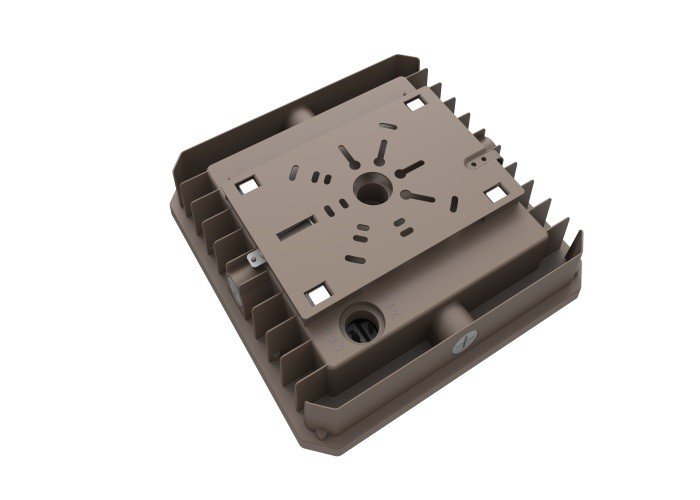
Upgrading to LED canopy lights can reduce gas station lighting energy costs by 60-70% while improving safety, customer experience, and brand image.
This comprehensive guide covers everything you need to know about designing, selecting, and installing LED canopy lights for gas stations, convenience stores, and other forecourt applications.
1. Understanding Gas Station Canopy Lighting Requirements
Gas station canopy lighting must meet specific illumination standards for safety, security, and customer comfort. The Illuminating Engineering Society (IES) recommends 20-50 foot-candles (200-500 lux) at the pump island level, with higher levels for premium brand stations. Key requirements include uniform light distribution to eliminate dark spots, color rendering that allows customers to see clearly when filling up, and durability to withstand weather, gasoline vapors, and temperature extremes. Most jurisdictions require canopy lights to meet local building codes and safety standards. Some states have specific regulations for outdoor lighting, including light trespass limits to prevent spill onto adjacent properties. Always verify local requirements before designing your lighting system.
- IES recommends 20-50 fc (200-500 lux) at pump level
- Uniform distribution eliminates dark spots
- Durable construction withstands harsh environments
- Check local codes and light trespass regulations
- Premium stations may require higher illumination
2. Determining the Right Wattage and Quantity
Calculating the correct wattage and number of fixtures depends on canopy size, mounting height, and desired light level. A typical gas station canopy is 2,000-5,000 square feet, requiring 140,000-350,000 lumens total for 70 lumens per square foot. **Small Canopy** (2,000 sq ft): 4-6 fixtures at 100W-150W each. **Medium Canopy** (3,000-4,000 sq ft): 6-10 fixtures at 150W-200W each. **Large Canopy** (5,000+ sq ft): 10-15 fixtures at 200W-300W each. LED canopy lights produce 120-150 lumens per watt, so a 150W fixture delivers 18,000-22,500 lumens. Higher mounting heights (14-18 feet) require more lumens than lower heights (10-12 feet). Use photometric analysis software for precise calculations on your specific canopy geometry.
- Target: 70-100 lumens per square foot
- Small canopy: 4-6 fixtures at 100-150W
- Medium canopy: 6-10 fixtures at 150-200W
- Large canopy: 10-15 fixtures at 200-300W
- Use photometric analysis for precise design
3. Spacing and Layout for Uniform Illumination
Proper spacing ensures uniform light distribution without bright spots or shadows. For typical gas station canopies with 12-16 foot mounting heights, space fixtures 8-12 feet apart in a grid pattern. The exact spacing depends on fixture beam angle and output. **Rectangular Canopies**: Use a grid pattern with equal spacing in both directions. **Irregular Canopies**: Adjust fixture placement to cover all pump positions and eliminate shadows from columns. **Multi-Island Stations**: Ensure each pump island receives adequate light—minimum 20 fc at nozzle height. Edge fixtures should be positioned 3-5 feet from canopy perimeter to minimize light spill beyond the canopy. For stations with convenience store fronts, coordinate canopy lighting with building facade lighting for visual continuity.
- Space fixtures 8-12 feet apart for typical heights
- Grid pattern for rectangular canopies
- Minimum 20 fc at each pump nozzle
- Edge fixtures 3-5 feet from perimeter
- Coordinate with building facade lighting
4. IP Rating and Weather Protection
Gas station canopy lights face harsh conditions: rain, snow, gasoline vapors, cleaning chemicals, and temperature extremes. IP65 is the minimum acceptable rating, providing complete dust protection and resistance against water jets. IP66 offers enhanced protection against powerful water jets, recommended for areas with heavy rain or pressure washing. For coastal locations, marine-grade fixtures with enhanced corrosion resistance extend fixture life. Consider fixtures rated for -30°C to +50°C operating temperature for year-round reliability in most climates. Quality fixtures feature sealed housings with gaskets, IP68 rated cable entries, and UV-resistant lenses. The driver (power supply) should be housed in a protected compartment, not exposed to direct weather. Some manufacturers offer extended warranties for fixtures in harsh environments.
- IP65 minimum, IP66 for harsh conditions
- Marine-grade for coastal installations
- Temperature rating: -30°C to +50°C
- Sealed housings with IP68 cable entries
- Protected driver compartment
5. Color Temperature and CRI Selection
Color temperature affects visibility, safety, and brand perception at gas stations. **5000K (Daylight)** is the most popular choice, providing bright, clear illumination that enhances visibility and creates a modern, professional appearance. This temperature works well for most major petroleum brands. **4000K (Neutral White)** offers slightly warmer light that’s easier on the eyes for extended periods. Suitable for stations attached to convenience stores with more customer dwell time. **6000K+ (Cool White)** delivers the brightest perceived light but may appear harsh. Use only for security-focused applications. Color Rendering Index (CRI) of 70-80 is sufficient for most stations. CRI 80+ is recommended for stations with car washes or detailing services where color matching matters. LED lights maintain consistent color temperature throughout their life, unlike metal halide which shifts over time.
- 5000K most popular for gas stations
- 4000K warmer, good for convenience stores
- CRI 70-80 sufficient for most applications
- CRI 80+ for car wash/detailing areas
- LED maintains consistent color over life
6. Energy Savings and ROI Calculation
LED canopy lights deliver dramatic energy savings compared to traditional fixtures. **Metal Halide Comparison**: A 400W metal halide produces roughly 32,000 lumens. A 200W LED produces the same light output—50% energy savings. **Typical Annual Savings**: A 6-pump station running 24/7 with 8 LED fixtures (150W each) vs 8 metal halide (400W each) saves approximately 17,500 kWh per year. At $0.12/kWh, that’s $2,100 annual savings. **Payback Period**: At $150-200 per LED fixture plus installation, most stations achieve 1.5-3 year payback. Utility rebates ($30-100 per fixture) further reduce payback time. **Additional Savings**: No relamping costs (LEDs last 50,000+ hours vs 20,000 for metal halide). Reduced maintenance labor. Lower HVAC load in attached convenience stores (LEDs produce less heat). Consider dimming controls to reduce light levels during low-traffic hours (typically 10 PM – 6 AM), adding another 15-25% energy savings.
- 200W LED = 400W metal halide equivalent
- 50%+ energy savings typical
- $2,000+ annual savings for 6-pump station
- 1.5-3 year payback with rebates
- Dimming adds 15-25% additional savings