
LED Canopy Lights FAQ: Top 25 Questions Answered 2026
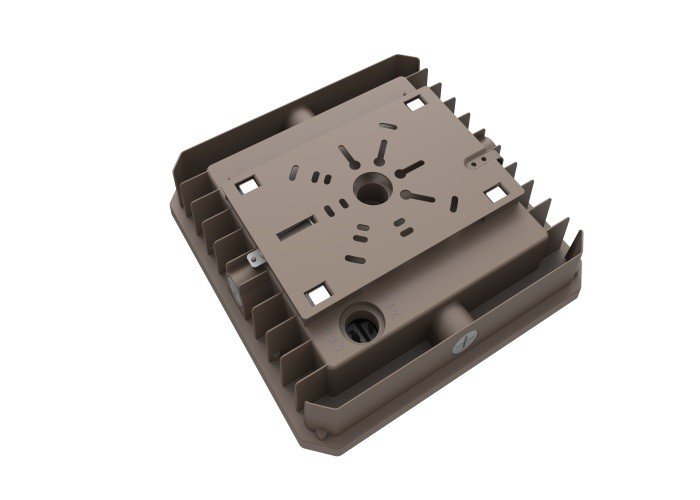
A: LED canopy lights are outdoor-rated fixtures designed for semi-enclosed overhead structures like gas station canopies, parking garage entrances, and drive-through areas. They provide uniform, weather-resistant illumination from mounting heights of 10-20 feet.
A: A typical 6-pump gas station with a 3,000 sq ft canopy needs 6-8 fixtures at 150W-200W each. Calculate based on 70-100 lumens per square foot. Small canopies (2,000 sq ft): 4-6 fixtures. Large canopies (5,000+ sq ft): 10-15 fixtures.
A: 100W-300W fixtures are typical. 150W is most common for average pump island coverage. Higher wattage needed for larger canopies or higher mounting heights (16+ feet). A 150W LED produces 18,000-22,500 lumens, replacing a 400W metal halide.
A: IP65 is minimum for gas station canopies—dust-tight and protected against water jets. IP66 recommended for heavy rain or pressure washing. IP67 needed for flood-prone locations. Marine-grade required for coastal installations.
A: IES recommends 20-50 foot-candles (200-500 lux) at pump nozzle height. Premium brand stations typically use 40-50 fc. Standard stations may use 20-30 fc. Check local regulations as some jurisdictions have specific requirements.
A: Yes! 150W-200W LED replaces 400W metal halide. Benefits: 50%+ energy savings, instant-on, 50,000+ hour life vs 20,000 hours, no color shift over time, better performance in cold weather, reduced maintenance costs.
A: Quality LED canopy lights last 50,000-100,000 hours. At 24/7 operation, that’s 5.7-11.4 years. Unlike traditional bulbs, LEDs gradually dim rather than fail suddenly, giving advance notice for replacement planning.
A: 5000K (daylight) is most popular—bright, clear illumination that enhances visibility and creates a modern appearance. 4000K is warmer, suitable for stations with convenience stores. 6000K+ is harsh and not recommended for customer-facing areas.
A: For typical 12-16 foot mounting heights, space fixtures 8-12 feet apart in a grid pattern. Higher mounting requires wider spacing. Ensure each pump island receives minimum 20 fc. Use photometric analysis for precise spacing.
A: Most jurisdictions require electrical permits for canopy light installation or replacement. Some areas have outdoor lighting ordinances. Check with your local building department. Licensed electrical contractors typically handle permitting.
A: While fixture mounting may be DIY-friendly for experienced individuals, canopy light installation involves working at heights, electrical connections, and code compliance. Most jurisdictions require licensed electricians. Insurance may not cover DIY installations.
A: Canopy lights are designed for semi-enclosed structures with limited vertical clearance (10-20 ft mounting height) and provide wide, uniform distribution. Area lights are for open outdoor spaces, often pole-mounted at 15-40 feet, with more focused beam patterns.
A: Many LED canopy lights support 0-10V dimming. Dimming during low-traffic hours (typically 10 PM – 6 AM) can save additional 15-25% energy. Verify dimming compatibility before purchase. Not all fixtures are dimmable.
A: (Old watts – New watts) × Hours × 365 ÷ 1000 × Rate = Annual savings. Example: (400W – 150W) × 24hr × 365 ÷ 1000 × $0.12 = $263/year per fixture. An 8-fixture station saves $2,100/year.
A: Yes! Many utilities offer $30-100 per fixture rebates for DLC-listed LED canopy lights. Some states offer additional incentives for gas stations. Check with your local utility’s commercial efficiency program.
A: Yes! LEDs perform excellently in cold temperatures, unlike metal halide which requires warm-up time. LEDs actually run more efficiently in cold weather due to better heat dissipation. Ideal for northern climates.
A: Minimal maintenance. Clean lenses annually to maintain light output. Inspect seals and gaskets every 2-3 years. No lamp replacements for 50,000+ hours. In harsh environments (coastal, chemical exposure), inspect annually.
A: Yes, canopy lights work well in parking garage entrances and drive aisles with ceiling heights under 20 feet. For interior garage areas with higher ceilings, consider LED garage lights or high bay fixtures instead.
A: CRI 70-80 is sufficient for most gas stations. CRI 80+ recommended for stations with car washes or detailing services where color accuracy matters. Higher CRI improves product appearance in convenience stores.
A: Turn off power. Use soft cloth with mild soap and water. Avoid abrasive cleaners or high-pressure sprays directly on seals. Clean annually or more frequently in dusty environments. Regular cleaning maintains light output.
A: Quality LED canopy lights come with 5-10 year warranties. Premium brands may offer extended warranties. Warranty should cover LED array, driver, and housing. Check terms for environmental exclusions.
A: Yes, especially for gas stations with large electrical systems or areas prone to lightning. Install surge protection at the panel. Many quality canopy lights include built-in surge protection. Surge damage is a common cause of driver failure.
A: Yes, LED canopy lights are ideal for ATM kiosks and bank drive-throughs. The compact design and weather resistance work well for small overhead structures. Typically 1-2 fixtures at 70W-100W provide adequate illumination.
A: Gas station canopies: typically 12-16 feet. Parking garage entrances: 10-14 feet. Higher mounting (18+ feet) requires higher-wattage fixtures for equivalent ground-level illumination. Follow manufacturer’s recommendations.
A: UL or ETL listing (required for code compliance). DLC certification (for utility rebates). IP rating verified by recognized lab. FCC compliance. For wet locations, verify wet location listing. Energy Star available for some fixtures.
相关产品:HAROLUX LED Canopy Lights
Related Canopy Lighting Pages
- LED Canopy Lights Manufacturer for product overview and OEM/ODM information
- Commercial LED Lighting Manufacturer for other project categories
- Request a Quote for gas station and canopy projects


