LED Wall Pack Lights for Commercial Security

LED wall pack lights are essential fixtures for commercial building exterior lighting, providing security, safety, and architectural accent illumination. These versatile outdoor lighting fixtures mount directly to building walls and project light outward to illuminate perimeters, walkways, and entry points.

What Are LED Wall Pack Lights?

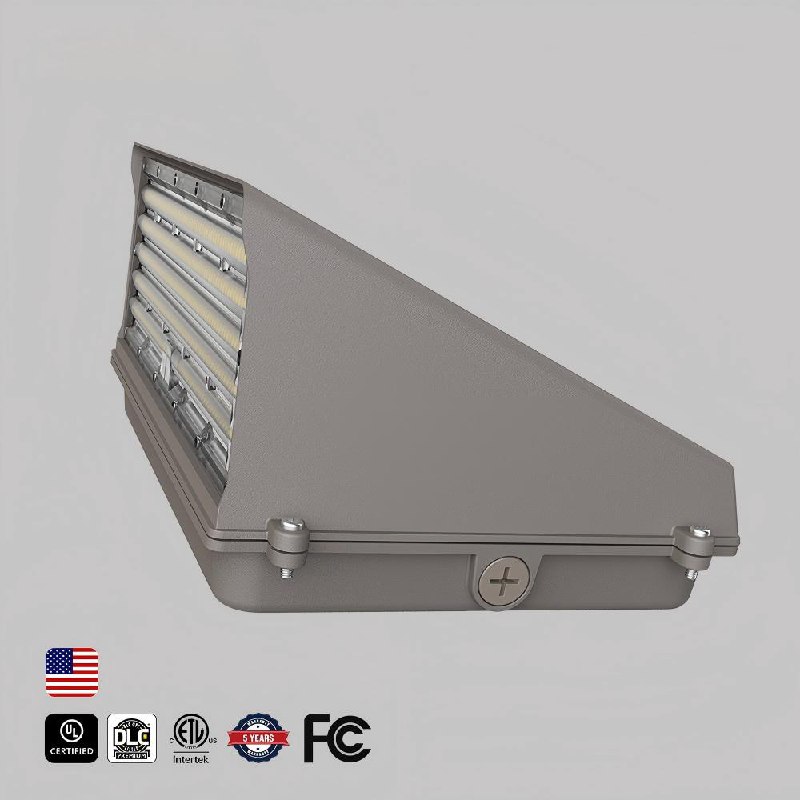
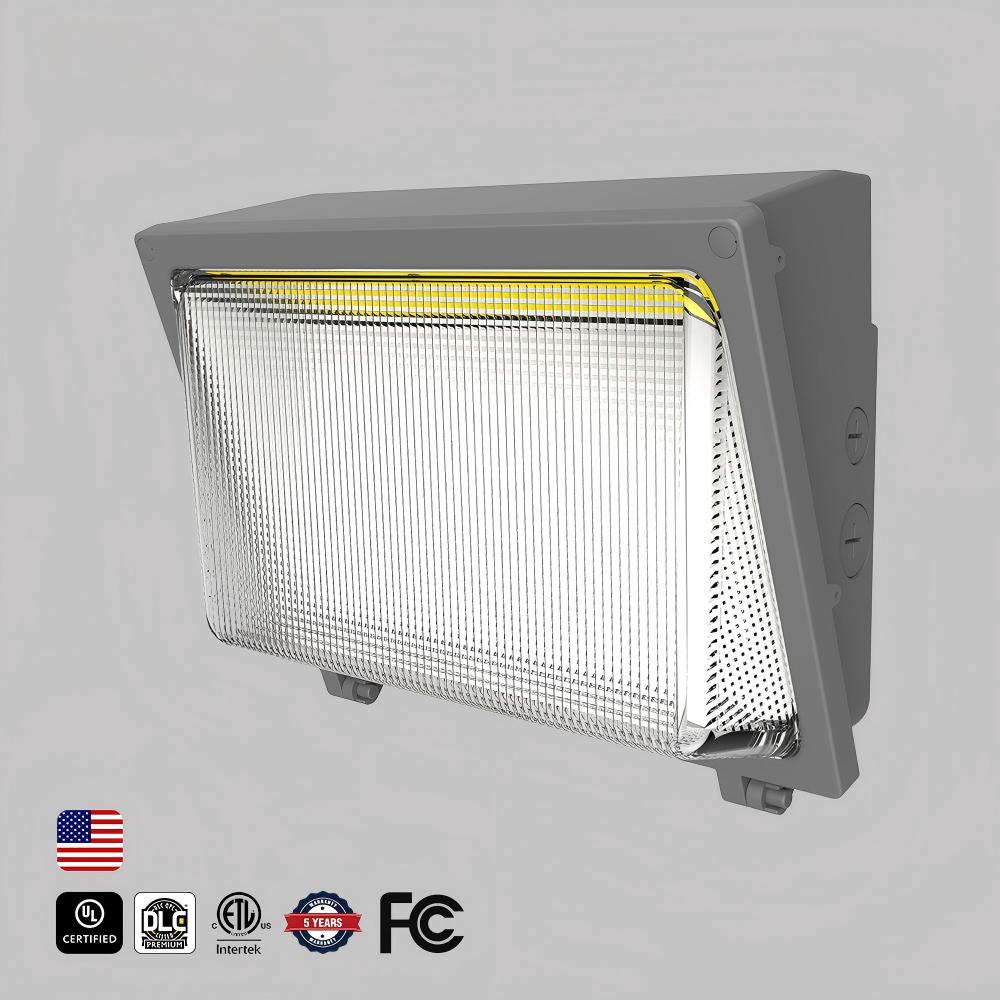
Wall pack lights are outdoor lighting fixtures designed for mounting on building walls. They project light outward and downward to illuminate areas around commercial buildings, providing security lighting for parking lots, walkways, building entrances, and loading docks.

📊 Key Benefits of LED Wall Packs

  • 💰 Energy Savings: 50-70% reduction compared to MH/HPS
  • ⏰ Long Lifespan: 50,000+ hours maintenance-free
  • ⚡ Instant On/Off: No warm-up, sensor compatible
  • 🌧️ Durability: IP65 rated for all weather
  • 🔒 Security: Bright illumination deters crime
  • 🔧 Low Maintenance: No bulb changes for 10+ years

Types of LED Wall Pack Lights

🔷 Full Cutoff

All light directed downward. Required for Dark Sky compliance.

Best for: Residential areas, Dark Sky zones

🔷 Semi-Cutoff

Some light upward. Balance of coverage and control.

Best for: General commercial use

🔷 Forward Throw

Light projected away from building at an angle.

Best for: Walkways, parking edges

🔷 Architectural

Decorative design with functional lighting.

Best for: Hotels, restaurants, retail

Recommended LED Wall Pack Lights

HAROLUX offers a complete range of LED wall packs for commercial security lighting:

Model Wattage Lumens Features
SS-WK07 20W-100W 2,800-14,000 lm Full Cutoff, Dark Sky
SS-WK08 20W-120W 2,800-16,800 lm 140 lm/W, High Efficiency
SS-WK06 40W-120W 5,600-16,800 lm Selectable Wattage/CCT
Slim Series 25W-60W 3,500-8,400 lm Low Profile, Modern

LED Wall Pack Light Specifications

HAROLUX SS-WK08 High Efficiency Wall Pack – 140 lm/W


Wall Pack Lighting Applications

🏢 Building Perimeter

100-150W full cutoff at 20-30 ft spacing

🚗 Garage Entrances

50-100W above doors and drive lanes

🚪 Building Entrances

Required at every door for code compliance

🚛 Loading Docks

150-200W for safe night operations

📐 Light Level Recommendations

Application Foot-Candles Fixture Spacing
Building Perimeter 0.5-1.0 fc 50-75W 25-35 ft
High Security 2.0-5.0 fc 100-150W 15-20 ft
Building Entrances 5.0-10.0 fc 50-100W Per door
Loading Docks 10.0-20.0 fc 150-200W Per bay

💰 Energy Savings Calculator

Converting from 175W MH to 50W LED:

⚡ Energy Savings: 71%
💵 Annual Cost: $460 → $130/year
📅 Payback: 1.5-2 years
🔧 Maintenance: $100+/year saved

*Based on 10 fixtures, $0.12/kWh, 12 hrs/day

🌙 Dark Sky Compliance

Why Dark Sky Matters

  • ✅ No upward light pollution
  • ✅ Reduces glare and light trespass
  • ✅ Preserves night sky visibility
  • ✅ Protects wildlife ecosystems

HAROLUX SS-WK06/07 are Dark Sky compliant.


❓ Wall Pack Lighting FAQ

What wattage do I need?

General perimeter: 50-75W. High-security: 100-150W.

Are they waterproof?

Yes, IP65 rated – protected against dust and water jets.

Do they include photocells?

SS-WK07 includes integrated photocell for dusk-to-dawn operation.

🔗 Related Products

📞 Get a Free Security Lighting Design

Free Photometric Analysis

Our engineering team provides complimentary lighting layouts for your project.

Contact HAROLUX →

Last updated: March 2026

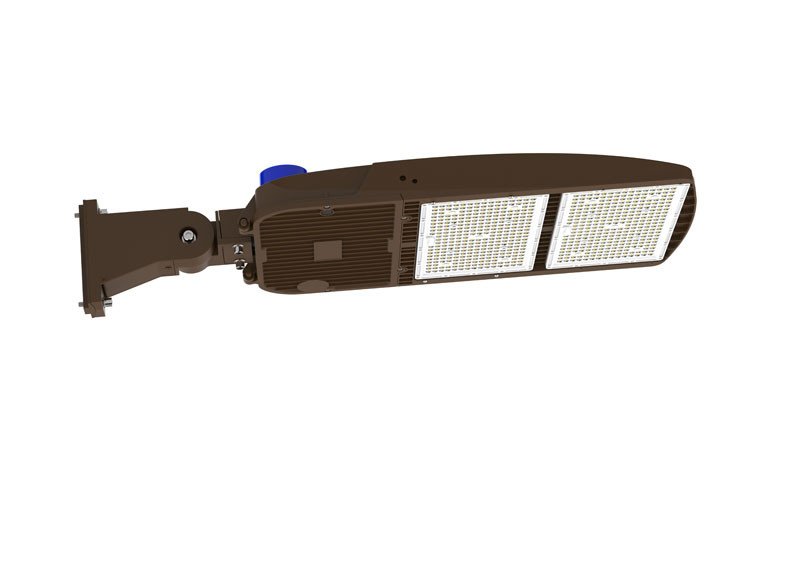
LED Shoebox Lights for Parking Lot

Parking lot lighting is essential for commercial properties, providing safety, security, and visibility for customers and employees. LED parking lot lights have revolutionized outdoor area lighting with their superior energy efficiency, long lifespan, and excellent light quality.

Why LED Parking Lot Lights?

LED shoebox lights and area lights are the modern standard for parking lot illumination. Compared to traditional metal halide or high-pressure sodium fixtures, LED parking lot lights offer:

📊 LED Parking Lot Lighting Benefits

  • 💰 Energy Savings: 50-70% reduction in energy costs
  • ⏰ Long Lifespan: 50,000-100,000 hours of operation
  • ⚡ Instant On/Off: No warm-up time, ideal for motion sensors
  • 👁️ Better Visibility: 70+ CRI for improved security
  • 🔧 Low Maintenance: Fewer bulb replacements
  • 🌿 Eco-Friendly: Less light pollution

Types of Parking Lot Lights

1. Shoebox Lights

Rectangular fixtures mounted on poles for wide, even illumination.

Best for: Large parking lots, shopping centers

2. Post Top Lights

Decorative fixtures combining functionality with aesthetics.

Best for: Pedestrian areas, retail centers

3. Garage Lights

Vapor tight fixtures for covered parking structures.

Best for: Parking garages, underground lots

Recommended LED Parking Lot Lights

HAROLUX offers high-performance LED shoebox lights for commercial parking lots:

Model Wattage Lumens Coverage
SS-AR07-100 100W 14,000 lm ~4,000 sq ft
SS-AR07-200 200W 28,000 lm ~8,000 sq ft
SS-AR07-300 300W 42,000 lm ~12,000 sq ft
SS-AR07-400 400W 56,000 lm ~16,000 sq ft

LED Shoebox Light Specifications


Parking Lot Lighting Design Guide

📐 Recommended Light Levels (IESNA)

Parking Type Min (fc) Avg (fc) Uniformity
Basic Parking 0.2 fc 0.5 fc 4:1
Standard Commercial 0.5 fc 1.0 fc 3:1
Shopping Centers 1.0 fc 2.0 fc 3:1
High Security 2.0 fc 5.0 fc 2:1

📏 Pole Height & Spacing

  • 12-15 ft poles: Small lots, 150W fixtures
  • 20-25 ft poles: Commercial lots, 200-300W fixtures
  • 30-40 ft poles: Large lots, 400W+ fixtures
  • Spacing rule: 4-5x pole height between fixtures

💰 Energy Savings Calculator

Converting from 400W MH to 150W LED:

⚡ Energy Savings: 62.5%
💵 Annual Cost: $1,750 → $650/year
📅 Payback: 2-3 years
🔧 Maintenance: $500+/year saved

*Based on 10 fixtures, $0.12/kWh, 12 hrs/day

Parking Lot Lighting Applications

🛒 Shopping Centers

Bright, uniform lighting to attract customers

🏢 Office Buildings

Employee safety during early/late hours

🏨 Hotels

24/7 illumination for guest safety

🏥 Healthcare

Highest light levels for emergency access


❓ Parking Lot Lighting FAQ

How many lights do I need?

Rule of thumb: one 200W LED per 4,000-6,000 sq ft. Contact us for free photometric analysis.

Best color temperature?

4000K for commercial, 5000K for high-security areas.

Are they Dark Sky compliant?

Yes, many HAROLUX shoebox lights feature full cutoff optics.

🔗 Related Products

📞 Get a Free Lighting Design

Free Photometric Analysis

Our team provides complimentary lighting layouts for your parking lot project.

Contact HAROLUX →

Last updated: March 2026

Vapor tight LED lights are essential lighting solutions for harsh environments where moisture, dust, and extreme conditions are present. This guide covers the best applications for vapor tight fixtures and how to choose the right one for your specific needs.

What Are Vapor Tight LED Lights?

Vapor tight lights, also known as vapor proof or sealed fixtures, are designed to prevent moisture, dust, and contaminants from entering the housing. With IP65 or higher ratings, these fixtures are ideal for wet locations and harsh industrial environments.

Key Features of Vapor Tight Fixtures

  • IP65/IP66 Rating: Complete protection against dust and water jets
  • Sealed Housing: Prevents moisture ingress and corrosion
  • Wide Temperature Range: Operates in extreme hot and cold conditions
  • Impact Resistant: Durable construction for industrial use
  • NSF Certified Options: Food-safe for processing facilities

Applications for Vapor Tight LED Lights

1. Car Wash Lighting

Car wash facilities require lighting that can withstand constant water exposure, chemicals, and humidity. Vapor tight LED lights are the ideal solution for:

  • Self-serve wash bays
  • Automatic tunnel washes
  • Vacuum stations
  • Equipment rooms

Recommended: HAROLUX VT Series Vapor Tight Lights with IP65 rating for continuous water exposure.

2. Parking Garage Lighting

Underground and covered parking structures face moisture, exhaust fumes, and temperature fluctuations. Vapor tight fixtures provide reliable illumination with minimal maintenance.

  • Underground parking levels
  • Covered parking structures
  • Entry and exit ramps
  • Stairwells and elevators

Benefits: Reduced maintenance costs, uniform illumination, long lifespan in damp conditions.

3. Food Processing Lighting

Food processing and beverage production facilities require lighting that meets strict hygiene standards. NSF-certified vapor tight lights prevent contamination and withstand washdown procedures.

  • Meat and poultry processing
  • Dairy production
  • Beverage bottling
  • Commercial kitchens

Requirements: NSF certification, IP66+ rating, chemical resistance for cleaning agents.

4. Parking Lot and Carport Lighting

Outdoor covered areas like parking lots and carports benefit from weather-resistant vapor tight fixtures that can handle rain, snow, and temperature extremes.

  • Apartment complex carports
  • Shopping center parking
  • Commercial building entrances
  • Drive-through lanes

5. Industrial and Warehouse Lighting

Manufacturing facilities, warehouses, and industrial plants often have areas with dust, humidity, or chemical exposure. Vapor tight lights provide reliable illumination in these challenging environments.

  • Manufacturing floors
  • Chemical storage areas
  • Loading docks
  • Equipment maintenance areas

6. Agriculture and Livestock Lighting

Barns, greenhouses, and agricultural facilities require lighting that can handle dust, humidity, and ammonia exposure from animal waste.

  • Livestock barns
  • Poultry houses
  • Greenhouses
  • Milking parlors

Vapor Tight Light Selection Guide

Application IP Rating Needed Wattage Range Special Requirements
Car Wash IP65+ 25-60W Chemical resistant
Parking Garage IP65 35-60W Linkable design
Food Processing IP66+ 35-50W NSF certified
Industrial IP65 40-100W Dust resistant
Agriculture IP65+ 35-60W Ammonia resistant

Why Choose HAROLUX Vapor Tight Lights?

The HAROLUX VT Series offers:

  • IP65 Waterproof Rating: Protected against water jets from any direction
  • Wattage Selectable: 25W/35W/45W options in a single fixture
  • Color Temperature Selectable: 3500K/4000K/5000K for different applications
  • Linkable Design: Connect multiple fixtures for continuous runs
  • 5-Year Warranty: Reliable performance backed by industry-leading warranty

Product Specifications

Model Wattage Lumens Length IP Rating
VT-25 25W 3,250 lm 2ft IP65
VT-35 35W 4,550 lm 4ft IP65
VT-45 45W 5,850 lm 4ft IP65

Related Products

For comprehensive lighting solutions in wet and harsh environments:

Get a Quote for Your Project

Whether you need lighting for a car wash, parking garage, or food processing facility, our team can help you select the right vapor tight solution. Contact HAROLUX for a free consultation.

Last updated: March 2026

LED Wall Pack FAQ

LED Wall Pack Frequently Asked Questions

What is an LED wall pack light?

An LED wall pack light is an outdoor lighting fixture designed to be mounted on building walls. It uses LED technology to provide efficient illumination for building perimeters, parking areas, loading docks, and security applications. LED wall packs typically replace older metal halide or high-pressure sodium fixtures.

How many watts do I need for a wall pack?

Wall pack wattage depends on mounting height and application. For 10-12 ft mounting, use 20-40W. For 12-16 ft, use 40-60W. For 16-24 ft, use 60-100W. For heights above 24 ft, consider 100-120W fixtures. Higher mounting requires more wattage to achieve the same ground-level illumination.

What is the difference between full cutoff and forward throw wall packs?

Full cutoff wall packs direct all light downward at or below 90 degrees, preventing light pollution and trespass. They’re required in dark-sky communities. Forward throw wall packs project light further from the building at angles above 90 degrees, providing wider coverage for parking areas and large perimeters.

How long do LED wall packs last?

Quality LED wall packs have a rated lifespan of 50,000+ hours. At 12 hours of daily operation, this translates to over 11 years of service. Unlike metal halide lamps that gradually dim over time, LEDs maintain consistent output throughout their lifespan.

Are LED wall packs waterproof?

Most commercial LED wall packs are rated IP65 or higher, meaning they’re dust-tight and protected against water jets. This makes them suitable for outdoor use in all weather conditions, including heavy rain, snow, and coastal environments with salt spray.

What color temperature should I choose?

For most commercial applications, 4000K (neutral white) provides balanced illumination. 5000K (daylight) offers higher visibility for security applications. 3000K (warm white) is suitable for residential-adjacent properties where light trespass is a concern.

Can LED wall packs be used with photocells?

Yes, most LED wall packs are compatible with photocells for automatic dusk-to-dawn operation. Many models include built-in photocells or have knockouts for external sensor installation. Photocell control can reduce energy consumption by ensuring lights only operate when needed.

How do I calculate energy savings from LED wall packs?

LED wall packs typically save 60-70% compared to metal halide fixtures. A 100W LED replacing a 250W metal halide saves approximately $157 per year at $0.12/kWh with 12-hour daily operation. Payback periods are typically 1-2 years for commercial installations.

What is a selectable CCT wall pack?

Selectable CCT wall packs allow you to choose between multiple color temperatures (typically 3000K, 4000K, 5000K) using an internal switch. This flexibility lets one fixture model serve different applications without ordering separate SKUs.

Do LED wall packs require maintenance?

LED wall packs require minimal maintenance compared to traditional fixtures. There are no bulbs to replace, and the solid-state construction is highly reliable. Occasional cleaning of the lens may be needed in dusty environments. Most manufacturers offer 5-year warranties.

What voltage do LED wall packs use?

Most commercial LED wall packs operate on 120-277V input, making them compatible with standard commercial electrical systems. Some models are also available in 347V or 480V for industrial applications. Always verify voltage compatibility before installation.

Can LED wall packs be dimmed?

Some LED wall pack models are dimmable using 0-10V dimming protocols. Dimming capability is useful for applications where light levels can be reduced during low-activity periods to save energy. Not all models support dimming – check specifications before purchasing.

What is the beam angle of a wall pack?

LED wall packs typically have beam angles of 100-120 degrees horizontal and 60-90 degrees vertical, creating a Type IV distribution pattern. This provides a forward-throw pattern ideal for illuminating areas away from the building wall.

How high should wall packs be mounted?

Wall packs are typically mounted at 10-25 ft above ground level. Lower mounting (10-15 ft) works for entrances and small areas. Medium mounting (15-20 ft) suits loading docks and garages. Higher mounting (20-25 ft) is used for building perimeters and parking areas.

What is the difference between LED wall packs and flood lights?

Wall packs are designed specifically for wall mounting with a fixed aiming angle, while flood lights offer adjustable aiming and can be mounted on poles or walls. Wall packs typically have a wider, more uniform distribution pattern for perimeter lighting, while flood lights provide focused, directional illumination.

Are LED wall packs dark-sky compliant?

Full cutoff LED wall packs are dark-sky compliant as they direct all light downward, preventing light pollution. Look for IDA (International Dark-Sky Association) certification or full cutoff designation if dark-sky compliance is required in your area.

Can LED wall packs be used in cold climates?

Yes, LED wall packs perform well in cold climates. Most are rated for operation down to -40°C (-40°F). Unlike fluorescent lights that lose efficiency in cold temperatures, LEDs actually perform slightly better in cooler conditions.

What certifications should I look for?

For commercial applications, look for UL or ETL listing for safety, DLC (DesignLights Consortium) qualification for utility rebates, and IP65 or higher for weather resistance. CE and RoHS certifications indicate compliance with European standards.

How do I choose between wall pack models?

Consider: (1) Required illumination level and mounting height, (2) Full cutoff vs. forward throw optics, (3) Energy efficiency (LM/W), (4) Color temperature needs, (5) Physical size and aesthetics, (6) Certifications required, (7) Budget and warranty.

Can wall packs be used for security camera lighting?

Yes, wall packs provide excellent illumination for security cameras. Use 5000K color temperature for best camera performance and facial recognition. Ensure even coverage without harsh shadows. Consider motion sensor integration for energy savings and to alert security when activity is detected.

What is the IP rating for outdoor wall packs?

IP65 is the minimum recommended rating for outdoor wall packs, providing dust-tight protection and resistance to water jets. IP66 and IP67 ratings offer even higher protection against heavy rain and temporary submersion, suitable for extreme weather environments.

How far apart should wall packs be spaced?

Space wall packs 1.5-2 times the mounting height apart. For example, at 15 ft mounting height, space fixtures 22-30 ft apart. Adjust spacing based on desired light levels and uniformity requirements. Overlap beam patterns by 20% for even coverage.

Can I retrofit existing wall pack housings with LED?

LED retrofit kits are available for converting existing wall pack housings to LED. These kits include an LED array and driver that fit into the existing housing. However, new LED wall packs often provide better thermal management and longer lifespan than retrofits.

What warranty do LED wall packs have?

Quality commercial LED wall packs typically come with 5-year warranties from reputable manufacturers. Some premium models offer 7-10 year warranties. Check warranty terms carefully – they may vary based on operating hours and environmental conditions.

Where can I buy commercial LED wall packs?

Commercial LED wall packs are available from lighting distributors, electrical wholesalers, and directly from manufacturers like HAROLUX. For commercial projects, contact HAROLUX for factory-direct pricing and technical support.

Related Products

Published: March 2026

LED Wall Pack Light Guide

What is an LED Wall Pack Light?

LED wall pack lights are outdoor lighting fixtures mounted on building walls for perimeter, security, and area lighting. They replace traditional metal halide and high-pressure sodium fixtures with energy-efficient LED technology, delivering 60-70% energy savings while providing superior illumination.

LED Wall Pack Wattage Guide

Choose the right wattage based on your application and mounting height:

Wattage Lumens Mounting Height Application
20W-30W 2,600-3,900 LM 8-12 ft Small entrances, alcoves
40W-60W 5,200-8,400 LM 12-18 ft Loading docks, garages
80W-100W 10,400-14,000 LM 16-24 ft Building perimeters
120W 16,800 LM 18-28 ft Large parking areas

Types of LED Wall Packs

Full Cutoff Wall Packs

Full cutoff fixtures direct all light downward, preventing light trespass and reducing sky glow. Required in many municipalities with dark-sky ordinances. Best for properties near residential areas.

Forward Throw Wall Packs

Forward throw optics project light further from the building, ideal for parking areas and large perimeter applications where wider coverage is needed.

Slim Wall Packs

Low-profile design for applications with limited wall space or aesthetic requirements. Often used in commercial buildings where appearance matters.

LED Wall Pack Applications

Warehouse & Distribution Centers

Wall-mounted fixtures provide essential lighting for loading docks, entrances, and perimeter security. 60W-100W models suit most warehouse applications.

Parking Garages

Wall packs eliminate the need for ceiling penetrations and provide even illumination on driving surfaces. 40W-60W fixtures at 8-12 ft mounting work well for most garages.

Commercial Buildings

Building perimeter lighting enhances security and aesthetics. Full cutoff fixtures prevent light from spilling into neighboring properties.

Security Lighting

Bright, reliable illumination deters crime and improves surveillance camera performance. Consider 5000K color temperature for maximum visibility.

Installation Guidelines

Mounting Height

Install wall packs at 10-25 ft above ground level. Higher mounting requires higher wattage to achieve desired light levels at ground level.

Fixture Spacing

Space fixtures 1.5-2 times the mounting height apart for uniform coverage. For example, fixtures at 15 ft height should be spaced 22-30 ft apart.

Electrical Requirements

  • Input voltage: 120-277V (most commercial LED wall packs)
  • Dedicated circuit recommended for large installations
  • Consider photocell for dusk-to-dawn operation
  • Motion sensor integration for energy savings

LED vs. Metal Halide Comparison

Feature LED Metal Halide
Efficacy 130-140 LM/W 60-80 LM/W
Lifespan 50,000+ hrs 15,000-20,000 hrs
Warm-up Time Instant 5-10 minutes
Maintenance Minimal Regular bulb replacement
Energy Cost Low High

Related Products

Published: March 2026
LED Flat Panel Light FAQ

Everything you need to know about LED flat panel lights, answered in one place. This FAQ covers the 25 most common questions from contractors, facility managers, and business owners.

Quick Navigation: Use Ctrl+F to find your question, or browse by category below.

📋 General Questions

1. What is an LED flat panel light?

An LED flat panel is a thin, rectangular light fixture that uses LEDs to produce even, glare-free illumination. Unlike fluorescent troffers, LED panels integrate the light source directly into a slim housing with a light guide plate or diffuser.

2. How thick are LED flat panel lights?

Edge-lit LED panels are typically 10-12mm thick (about 0.4-0.5 inches). Back-lit panels are thicker at 40-60mm. The ultra-thin design of edge-lit panels makes them ideal for low plenum spaces.

3. How long do LED flat panels last?

Quality LED panels are rated for 50,000+ hours of operation. At 12 hours per day, that’s over 11 years of maintenance-free lighting. No tube changes, no ballast replacements.

4. Are LED flat panels better than fluorescent troffers?

Yes. LED panels consume 50-70% less energy, last 3x longer, provide instant start with no flicker, operate silently (no ballast hum), and contain no mercury. They also offer better light quality and more features like dimming and tunable color temperature.

5. What sizes do LED flat panels come in?

Standard sizes are 1x4ft, 2x2ft, and 2x4ft. These match common ceiling tile dimensions for easy installation in drop ceilings.

📐 Sizing & Selection

6. What size LED panel do I need?

Match panel size to your space:

  • 1×4 – Corridors, narrow spaces, perimeter lighting
  • 2×2 – Most offices, meeting rooms, healthcare (most versatile)
  • 2×4 – Large offices, classrooms, conference rooms

7. How many LED panels do I need for my room?

A general rule for offices: one 2×2 panel per 64-100 square feet. For precise calculations, consider ceiling height, desired foot-candles, and wall colors. Use lighting layout software or consult a lighting professional for complex spaces.

8. What wattage should I choose?

Higher wattage = more light. For offices, 30-40W (2×2) or 50-60W (2×4) typically provides 30-50 foot-candles at standard ceiling heights. Consider selectable wattage models for flexibility.

9. What color temperature is best for offices?

4000K neutral white is the most popular for offices—it promotes alertness without feeling harsh. 3500K is warmer for hospitality-style spaces. 5000K is cooler for industrial settings or retail.

10. What is selectable color temperature?

Selectable (or tunable) CCT panels have an internal switch that lets you choose between multiple color temperatures (e.g., 3500K/4000K/5000K). One SKU works for multiple applications, reducing inventory complexity.

💡 Technology & Features

11. What is the difference between edge-lit and back-lit?

Edge-lit: LEDs along edges, light guided through plate. Ultra-thin (10-12mm), excellent uniformity, higher cost.

Back-lit: LEDs behind diffuser. Thicker (40-60mm), lower cost, simpler construction.

12. Do LED flat panels dim?

Most commercial LED panels include 0-10V dimming as standard. This works with compatible dimmers, occupancy sensors, and building automation systems. Verify dimming capability before purchasing.

13. What is 0-10V dimming?

0-10V is a standard dimming protocol where a control signal (0-10 volts) adjusts light output. 0V = off, 10V = full brightness. It requires two additional wires (typically purple and gray) connected to a compatible dimmer.

14. What does DLC listed mean?

DLC (DesignLights Consortium) qualification means the product meets energy efficiency standards required for utility rebates. If you want rebates, choose DLC-listed panels.

15. What is CRI and why does it matter?

Color Rendering Index (CRI) measures how accurately light reveals colors. CRI >80 is standard for offices. CRI >90 is recommended for retail, healthcare, and anywhere color accuracy matters.

🔧 Installation

16. How do I install LED flat panels in a drop ceiling?

Simply remove the existing ceiling tile or fixture, place the LED panel in the opening, and connect wires. Installation typically takes 5-10 minutes per panel. No special tools required.

17. Can I surface mount LED panels?

Yes, with a surface mount kit. The kit includes a frame that attaches to the ceiling, and the panel clips into the frame. Good for concrete or drywall ceilings without grid systems.

18. Can I suspend LED flat panels?

Yes, with suspension kits (cables or chains). This works well for open-ceiling designs and higher ceilings. Suspension kits are usually sold separately.

19. Do LED panels need a ballast?

No! LED panels have built-in drivers. Never connect LED panels to existing fluorescent ballasts—this will damage the LEDs and void the warranty. Wire directly to line voltage.

20. What voltage do LED flat panels use?

Most commercial panels accept AC120-277V input, covering standard 120V and 277V circuits. Check specifications before installation.

💰 Cost & Savings

21. How much do LED flat panels cost?

Prices vary by size, features, and quality. Typical range: $30-100 per panel for standard models. Premium edge-lit panels with advanced features cost more. DLC-listed panels often qualify for rebates.

22. How much energy do LED panels save?

LED panels typically save 50-70% compared to fluorescent troffers. A 50W LED panel replaces a 96W fluorescent fixture (3x32W tubes + ballast) while providing equivalent or better light.

23. What is the payback period for LED panels?

Typical payback: 2-4 years through energy savings alone. With utility rebates, payback can be under 2 years. Maintenance savings (no tube/ballast changes) add additional value.

24. Are there rebates for LED flat panels?

Yes, most utilities offer rebates for DLC-listed LED panels. Rebate amounts vary by region and utility. Check with your local utility or use the DLC rebate finder.

25. What is the warranty on LED flat panels?

Quality panels typically have 5-year warranties. Some premium models offer 7-10 year warranties. Always register your products and keep invoices for warranty claims.

📊 Quick Reference Chart

LED Flat Panel Light Details

Question Answer
Lifespan 50,000+ hours
Energy savings 50-70% vs fluorescent
Standard sizes 1×4, 2×2, 2×4
Thickness 10-12mm (edge-lit) / 40-60mm (back-lit)
Voltage AC120-277V
Dimming 0-10V standard
Warranty 5 years typical

Related Resources

Last updated: March 2026

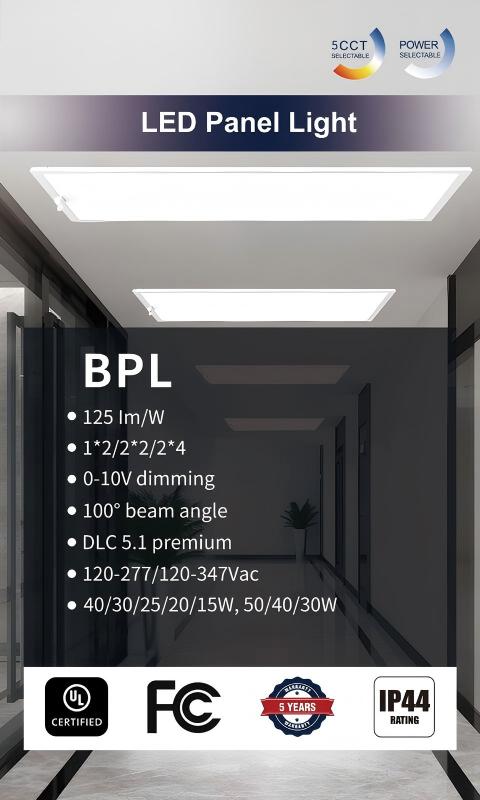
LED Flat Panel Light for Commercial Offices

LED flat panel lights have revolutionized commercial and office lighting with their ultra-thin design, uniform illumination, and energy efficiency. This comprehensive guide covers everything you need to know about selecting, installing, and maximizing the value of LED flat panels in 2026.

Quick Facts: LED flat panels consume 50-70% less energy than fluorescent troffers, last 3x longer, and provide superior light quality with no flicker or humming.

What is an LED Flat Panel Light?

An LED flat panel light is a thin, rectangular lighting fixture that uses LED technology to produce uniform, glare-free illumination. Unlike traditional fluorescent troffers with tubes and ballasts, LED flat panels integrate LEDs directly into a slim housing with a light guide plate or diffuser.

The SS-BPL series from HAROLUX offers:

  • Ultra-thin profile – Just 10-12mm thick for edge-lit models
  • Selectable wattage – Adjust brightness to match your needs
  • Selectable color temperature – Choose 3000K-5700K with one fixture
  • Multiple sizes – 1×4, 2×2, and 2×4 configurations
  • 50,000+ hour life – 10+ years of maintenance-free operation

LED Flat Panel Sizes Explained

LED flat panels come in three standard sizes to fit different ceiling grids:

Size Dimensions Typical Wattage Best For
1×4 1ft x 4ft (300x1200mm) 15-40W Corridors, narrow spaces, perimeter
2×2 2ft x 2ft (600x600mm) 20-40W Offices, meeting rooms, healthcare
2×4 2ft x 4ft (600x1200mm) 35-72W Large offices, classrooms, retail
💡 Pro Tip: The 2×2 size is the most versatile—it fits standard ceiling grids and works well in most commercial spaces. If unsure, start with 2×2.

Edge-Lit vs Back-Lit: Which is Better?

LED flat panels use two different technologies:

Edge-Lit Panels

LEDs are placed along the edges, and light is guided through a light guide plate (LGP) to create even illumination.

Advantages:

  • Ultra-thin (10-12mm)
  • Perfect for low plenum spaces
  • Excellent light uniformity
  • Modern, sleek appearance

Best for: Offices with low ceilings, modern aesthetic requirements, spaces where thin profile matters.

Back-Lit Panels

LEDs are placed behind the diffuser, similar to traditional troffers but without tubes.

Advantages:

  • Lower cost
  • Simpler construction
  • Good for standard ceiling heights
  • More robust

Best for: Budget-conscious projects, standard ceiling spaces, retrofit applications.

Feature Edge-Lit Back-Lit
Thickness 10-12mm 40-60mm
Cost Higher Lower
Light Uniformity Excellent Good
Plenum Space Minimal needed Standard clearance

Applications for LED Flat Panel Lights

🏢 Office Buildings

LED flat panels are the ideal choice for modern offices. The uniform light distribution eliminates shadows on desks and reduces eye strain during computer work. 4000K neutral white promotes alertness and productivity.

Recommended spacing: 8-10 feet between 2×2 fixtures at 9-10ft ceiling height.

🏥 Healthcare Facilities

Hospitals and clinics benefit from flicker-free, silent LED panels. No ballast hum means quieter patient rooms. Easy-to-clean surfaces suit hygiene requirements.

Consider: High CRI (>90) models for examination areas where color accuracy matters.

🏫 Schools and Universities

Classrooms need quality lighting for learning. LED panels provide consistent illumination without the flicker that can cause headaches and fatigue. Long lifespan means minimal disruption from maintenance.

🛒 Retail Stores

Showrooms and retail spaces benefit from clean, modern lighting that highlights merchandise without distraction. Consider 5000K daylight for product displays.

🏨 Hospitality

Lobbies, hallways, and guest areas benefit from the sleek appearance and warm light options. Dimmable panels create ambiance flexibility.

Color Temperature Selection Guide

LED Flat Panel Light Specifications

Choosing the right color temperature (CCT) affects both ambiance and functionality:

CCT Appearance Best Applications
3000K Warm White Lobbies, hospitality, residential-style spaces
3500K Neutral Warm Healthcare waiting areas, retail, restaurants
4000K Neutral White Offices, schools, general commercial (most popular)
5000K Daylight Retail displays, warehouses, industrial offices
5700K Cool Daylight Specialized applications, jewelry stores

Mounting Options

Recessed (Drop Ceiling)

Most common installation. Panels sit flush with ceiling tiles in standard T-bar grids.

  • Best for offices with existing drop ceilings
  • No additional hardware needed
  • Quick installation (5-10 minutes per panel)

Surface Mount

Mount directly to drywall, concrete, or other solid ceilings using a surface mount kit.

  • Good for spaces without drop ceilings
  • Requires surface mount kit (additional cost)
  • Typical install: 20-30 minutes per panel

Suspended

Hang from cables or chains for open ceiling designs.

  • Modern, industrial aesthetic
  • Positions light closer to work surfaces
  • Requires suspension kit

Energy Savings Calculator

Compare operating costs of LED panels vs fluorescent troffers:

Fixture Watts Annual Cost* Savings
2×4 Fluorescent (3x32W T8) 96W + ballast $50/yr
2×4 LED Panel 50W $26/yr $24/yr (48%)
2×2 Fluorescent (2x32W T8) 64W + ballast $33/yr
2×2 LED Panel 30W $16/yr $17/yr (52%)

*Based on 12 hrs/day, 365 days, $0.12/kWh. Does not include maintenance savings.

How Many Panels Do I Need?

Calculate fixture spacing based on desired light levels:

Application Foot-Candles Typical Spacing
Office – Open Plan 30-50 FC 8-10 ft (2×2 panels)
Office – Private 30-50 FC 1 panel per room
Classroom 30-50 FC 6-8 ft (2×2 panels)
Hallway/Corridor 10-20 FC 10-12 ft (1×4 panels)
Conference Room 30-50 FC 1 panel per 64 sq ft

Technical Specifications

Parameter Specification
Wattage Range 15W – 72W
Lumen Output 1,800 – 8,640 LM
Efficacy 120 – 150 LM/W
CRI >80 (>90 optional)
Input Voltage AC120-277V
Power Factor >0.95
Dimming 0-10V standard
Lifespan 50,000+ hours
Warranty 5 years

Why Choose HAROLUX LED Flat Panels

  • Factory-Direct Pricing – LED manufacturer since 2010
  • Flexible Options – Selectable wattage and color temperature
  • Full Certifications – UL, ETL, DLC, CE, RoHS
  • 5-Year Warranty – Manufacturer-backed reliability
  • OEM/ODM Services – Custom solutions available

Related Products

Last updated: March 2026

Retrofit LED Strip Light for T8/T12 Replacement

Upgrading from fluorescent T8 or T12 tubes to LED doesn’t require replacing entire fixtures. Retrofit LED strip lights install directly into existing fluorescent housings, cutting energy costs by 50-60% while delivering better light quality. This guide shows you how.

Bottom Line: Retrofit LED strips offer the fastest, most cost-effective path to LED lighting. Typical payback: 1.5-3 years. No ceiling modifications required.

What is a Retrofit LED Strip Light?

A retrofit LED strip light is designed to replace fluorescent tubes in existing strip fixtures. Unlike new LED fixtures, retrofit strips:

  • Fit existing housings – Same mounting brackets, same dimensions
  • Bypass ballast – Connect directly to line voltage
  • Upgrade efficiency – 130 LM/W vs 80-90 LM/W for fluorescent
  • Eliminate maintenance – No tube changes, no ballast replacements

T8/T12 Fluorescent vs Retrofit LED: Comparison

Feature T8 Fluorescent T12 Fluorescent Retrofit LED
Power (4ft) 32W + 8W ballast 40W + 10W ballast 40W (no ballast loss)
Lumens 2,800 LM 2,500 LM 5,200 LM
Efficacy 70-80 LM/W 50-60 LM/W 130 LM/W
Lifespan 15,000-20,000 hrs 12,000-15,000 hrs 50,000+ hrs
Start Time 1-3 seconds 2-5 seconds Instant
Maintenance Replace tubes every 2-3 yrs Replace tubes every 1-2 yrs None for 10+ yrs
Mercury Yes (disposal required) Yes (disposal required) None

Who Should Choose Retrofit LED Strips?

✅ Best Candidates for Retrofit:

  • Existing fluorescent fixtures in good condition – Housings, lenses, and brackets are intact
  • Limited renovation budget – Retrofit costs 30-50% less than new fixtures
  • Minimal disruption required – Installation takes 15-20 minutes per fixture
  • Historic or preserved spaces – Maintain existing ceiling appearance
  • Large-scale upgrades – Volume discounts on retrofit strips reduce per-unit cost

❌ Consider New Fixtures Instead When:

  • Existing housings are damaged or corroded
  • Complete renovation planned anyway
  • Different fixture style desired (e.g., suspended vs surface mount)
  • Need advanced features like integrated sensors or emergency backup

Retrofit LED Strip Light Specifications

Retrofit LED Strip Light Specifications

Specification 4ft Model 8ft Model
Wattage 40W 80W
Lumens 5,200 LM 10,400 LM
Efficacy 130 LM/W 130 LM/W
Color Temp 3500K/4000K/5000K 3500K/4000K/5000K
Voltage AC120-277V AC120-277V
CRI >80 >80
Power Factor >0.95 >0.95
Lifespan 50,000+ hrs 50,000+ hrs
Certifications UL/ETL/DLC/CE UL/ETL/DLC/CE
Warranty 5 years 5 years

Step-by-Step Installation Guide

⚠️ Safety First: Always disconnect power at the circuit breaker before working on electrical fixtures. Verify power is off with a non-contact voltage tester.

Step 1: Gather Tools & Materials

  • Non-contact voltage tester
  • Screwdriver (flathead and Phillips)
  • Wire strippers/cutters
  • Wire nuts or Wago connectors
  • Ladder or lift
  • PPE (safety glasses, gloves)

Step 2: Remove Fluorescent Tubes

Carefully remove all fluorescent tubes from the fixture. Set aside for proper recycling—they contain mercury and should not be thrown in regular trash.

Step 3: Disconnect & Remove Ballast

Locate the ballast (usually a metal box inside the fixture). Note: Some installations may have ballasts at a central location rather than in each fixture.

Disconnect the ballast wires:

  • Black (hot) and white (neutral) from power supply
  • Wires to tombstones (tube sockets)

Remove the ballast entirely, or leave in place with wires disconnected. Some contractors leave the ballast in the housing to avoid creating a hole.

Step 4: Rewire Tombstones

Connect line voltage directly to the tombstones:

  • Black (hot) → One end of the strip (typically marked “LINE” or “HOT”)
  • White (neutral) → Other end of the strip (typically marked “NEUTRAL” or “N”)
💡 Note: Retrofit LED strips use single-end wiring on most models. Follow the specific wiring diagram included with your fixture.

Step 5: Mount the Retrofit Strip

Most retrofit strips use the same mounting brackets as the original fluorescent fixture:

  • Slide the LED strip into the existing brackets, or
  • Attach included mounting clips to the housing

Step 6: Make Electrical Connections

Connect the retrofit strip wires to the power supply:

  • Black to black (hot)
  • White to white (neutral)
  • Green or bare copper to ground

Use wire nuts or Wago connectors. Ensure all connections are tight and no exposed copper is visible.

Step 7: Restore Power & Test

Turn the circuit breaker back on. The LED strip should light immediately. If not:

  • Check connections
  • Verify the dimmer (if present) is not at minimum
  • Check that the fixture is wired to the correct circuit

Energy Savings Calculator

Retrofit LED Installation

Calculate your savings when upgrading from fluorescent to retrofit LED:

Scenario Fluorescent Retrofit LED Savings
4ft T8 (100 fixtures) $2,102/yr $1,261/yr $841/yr (40%)
8ft T12 (50 fixtures) $1,971/yr $1,051/yr $920/yr (47%)
2-lamp T8 HO (100) $2,628/yr $1,682/yr $946/yr (36%)

*Based on 12 hrs/day, 365 days/year, $0.12/kWh. Actual savings vary by usage and local rates.

Common Questions

Do I need an electrician?

If you’re comfortable with basic electrical work (changing outlets, installing light fixtures), you can install retrofit LED strips. Otherwise, hire a licensed electrician. Installation typically takes 15-20 minutes per fixture.

What if my ballast is compatible?

Some electronic ballasts work with LED tubes, but most retrofit strips require ballast bypass. Running LED strips through a ballast will cause flickering, reduced life, or immediate failure. Always follow the manufacturer’s instructions.

Can I dim retrofit LED strips?

Standard retrofit strips are non-dimmable. If you need dimming, specify 0-10V dimmable models when ordering. These require additional wiring for the dimming circuit.

What about emergency lighting?

Retrofit strips can be paired with external emergency battery backup units. For new installations requiring emergency lighting, consider new LED fixtures with integrated emergency drivers.

How do I dispose of fluorescent tubes?

Fluorescent tubes contain mercury and must be recycled properly. Contact your local waste management facility or use services like lamprecycle.org to find recycling locations.

Why Choose HAROLUX Retrofit LED Strips?

  • 130 LM/W High Efficacy – Maximum light output per watt
  • Direct Replacement – Fits existing fluorescent housings
  • Universal Voltage – AC120-277V works with most circuits
  • 50,000 Hour Life – 10+ years maintenance-free
  • Full Certifications – UL, ETL, DLC, CE compliant
  • 5-Year Warranty – Manufacturer-backed reliability
  • Factory Direct Pricing – OEM manufacturer since 2010

Ready to Upgrade?

Transform your fluorescent lighting to high-efficiency LED in hours, not days. Contact HAROLUX for:

  • Free lighting assessment
  • Custom payback calculations
  • Volume pricing for large projects
  • Technical support for installation

Request a Quote →

Related Resources

Last updated: March 2026

LED Linear Strip Light FAQ

Everything you need to know about LED linear strip lights, answered in one place. This FAQ covers the 25 most common questions from contractors, facility managers, and business owners.

Quick Navigation: Use Ctrl+F to find your question, or browse by category below.

📋 General Questions

1. What is an LED linear strip light?

An LED linear strip light is a long, narrow fixture with integrated LED chips. Unlike fluorescent strips that use replaceable tubes and ballasts, LED strips have the light source built into the housing, providing higher efficiency and longer life.

2. How long do LED linear strip lights last?

Quality LED strip lights like the SS-SP05 series are rated for 50,000+ hours of operation. At 12 hours per day usage, that’s over 11 years of maintenance-free lighting.

3. Are LED strip lights better than fluorescent?

Yes, in nearly every application. LED strips consume 40-60% less energy, last 2-3x longer, provide instant start with no flicker, and require zero maintenance. They also eliminate mercury disposal concerns.

4. Can LED strip lights replace fluorescent fixtures?

Two options exist: retrofit strips that install into existing fluorescent housings, or new LED strips that replace the entire fixture. Retrofit is faster and cheaper; new fixtures offer more features and better aesthetics.

5. What does “selectable wattage” mean?

Selectable wattage fixtures have an internal switch that lets you choose between 3 power levels. For example, the SS-SP05-4 (4ft model) offers 40W/50W/64W settings, allowing one fixture to meet different brightness requirements.

📐 Sizing & Selection

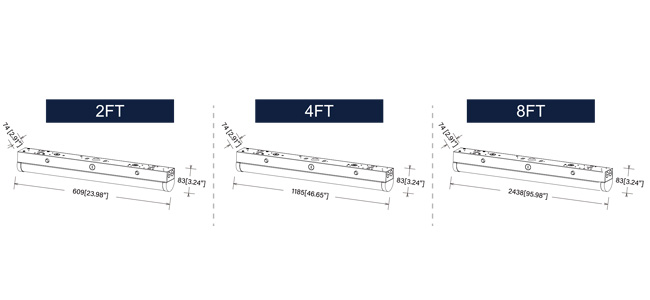
6. What sizes do LED strip lights come in?

Common sizes are 2ft, 4ft, and 8ft lengths. The SS-SP05 series offers all three to match different ceiling heights and application needs.

Size Best Ceiling Height Typical Application
2ft 8-12 ft Narrow aisles, under-shelf
4ft 10-16 ft Standard commercial
8ft 14-20 ft Warehouse, industrial

7. How many LED strip lights do I need?

Calculate based on desired foot-candles (FC) and room size:

  • Warehouses: 20-30 FC, 8ft spacing for 4ft fixtures at 14ft ceiling
  • Retail: 30-50 FC, 6ft spacing for 4ft fixtures at 12ft ceiling
  • Offices: 30-50 FC, 8ft spacing for 4ft fixtures at 9ft ceiling

8. What color temperature should I choose?

Match color temperature to your application:

  • 3500K (Warm White) – Retail, hospitality, healthcare waiting areas
  • 4000K (Neutral White) – Offices, schools, general commercial
  • 5000K (Daylight) – Warehouses, industrial, garages, outdoor areas

9. What’s the difference between 2ft, 4ft, and 8ft LED strips?

The main difference is coverage area and recommended ceiling height. 2ft covers approximately 4×4ft area at 10ft ceiling. 4ft covers 6×6ft area at 14ft ceiling. 8ft covers 8×8ft area at 18ft ceiling.

10. Can I use 8ft strips in a 4ft grid ceiling?

Not directly. 4ft grid ceilings require 4ft fixtures. However, you can mount 8ft strips perpendicular to the grid, or use suspended mounting that bypasses the grid entirely.

⚡ Installation & Electrical

11. How do I install LED linear strip lights?

Three mounting options:

  • Surface mount: Screw brackets to ceiling, snap fixture in place
  • Suspended: Hang with chains or cables from ceiling
  • Wall mount: Attach vertically for cove or perimeter lighting

12. Do LED strip lights need a ballast?

No. LED strips use built-in LED drivers. Never connect LED fixtures to existing fluorescent ballasts—this will damage the LEDs and void the warranty.

13. What voltage do LED strip lights use?

Most commercial LED strips accept AC120-277V input, covering standard 120V and 277V commercial circuits. Always verify voltage compatibility before installation.

14. Can LED strip lights be dimmed?

Yes, if equipped with 0-10V dimming. The SS-SP05 series includes 0-10V dimming as standard, compatible with most commercial dimmers and lighting control systems.

15. How do I wire 0-10V dimming?

0-10V dimming requires two additional wires (typically purple and gray) connected to a compatible dimmer or control system. These wires carry the dimming signal separate from power.

💡 Performance & Efficiency

16. How much energy do LED strip lights save?

LED strips typically save 40-60% compared to fluorescent equivalents. A 40W LED strip produces similar light to a 40W fluorescent tube plus ballast, but at lower actual wattage when using selectable settings.

17. What is LM/W efficacy?

Lumens per watt (LM/W) measures how efficiently a fixture converts electricity to light. Higher is better. The SS-SP05 series delivers 130-150 LM/W, compared to 80-100 LM/W for typical fluorescent systems.

18. Do LED strip lights produce heat?

LEDs produce less heat than fluorescent or incandescent lighting, but they still generate some heat. Quality fixtures include aluminum heat sinks to dissipate heat and extend LED life.

19. Can LED strip lights be used in cold environments?

Yes. Unlike fluorescent tubes that struggle to start in cold temperatures, LEDs perform well in cold environments. They’re actually more efficient in cooler temperatures.

20. What is CRI and why does it matter?

Color Rendering Index (CRI) measures how accurately a light source reveals colors. CRI >80 is standard for commercial applications. Higher CRI (>90) is preferred for retail, art galleries, and color-critical work.

🔧 Maintenance & Troubleshooting

21. Do LED strip lights need maintenance?

Virtually none. Quality LED strips are rated for 50,000+ hours with no lamp changes or ballast replacements. Occasional cleaning to remove dust is all that’s needed.

22. Why won’t my LED strip light turn on?

Check these common issues:

  • Power is off at the breaker
  • Wiring connections are loose
  • Dimmer is set to minimum (try adjusting)
  • Driver failure (rare, covered by warranty)

23. Can I repair a failed LED strip?

Generally no. LED strips are integrated units—if the driver or LEDs fail, the entire fixture needs replacement. However, with 50,000+ hour lifespan, this should not occur for 10+ years.

24. What voids the LED strip warranty?

Common warranty voids include:

  • Connecting to incompatible voltage
  • Using with fluorescent ballast
  • Physical damage from improper handling
  • Modifications to the fixture
  • Installation in environments outside rated specifications

25. How do I dispose of LED strip lights?

LEDs contain no mercury, unlike fluorescent tubes. They can be recycled as electronic waste. Check with local recycling facilities for proper disposal methods.

📊 Quick Reference Chart

LED Strip Light Specifications

Question Answer
Lifespan 50,000+ hours
Energy savings 40-60% vs fluorescent
Standard sizes 2ft, 4ft, 8ft
Color temps 3500K, 4000K, 5000K
Voltage AC120-277V
Dimming 0-10V standard
Warranty 5 years
Certifications UL, ETL, DLC, CE

Related Resources

Last updated: March 2026

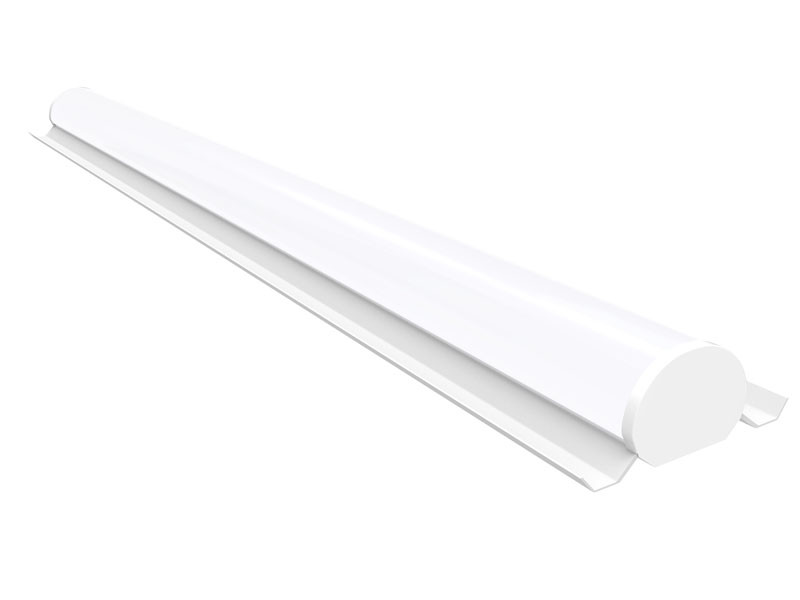
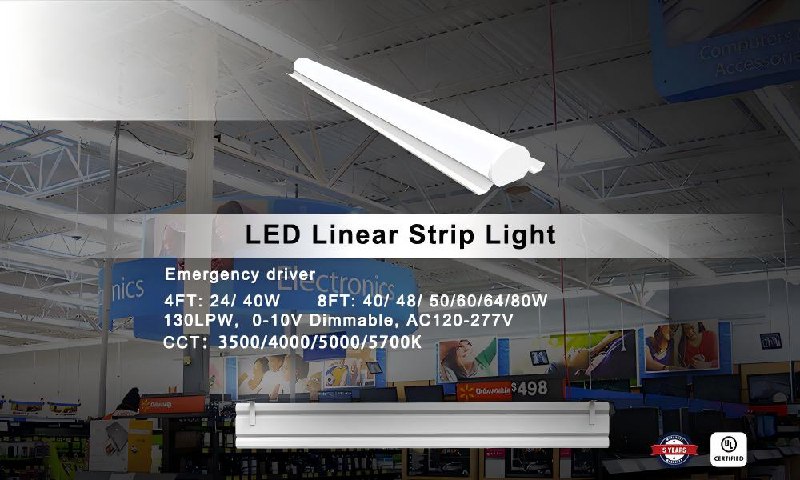
LED Linear Strip Light for Commercial Lighting

LED linear strip lights have become the go-to solution for commercial and industrial lighting upgrades. This comprehensive guide covers everything you need to know about selecting, installing, and maximizing the value of LED strip lighting in 2026.

Quick Facts: LED linear strip lights consume 50-60% less energy than fluorescent tubes, last 3x longer, and require zero maintenance for 10+ years.

What is an LED Linear Strip Light?

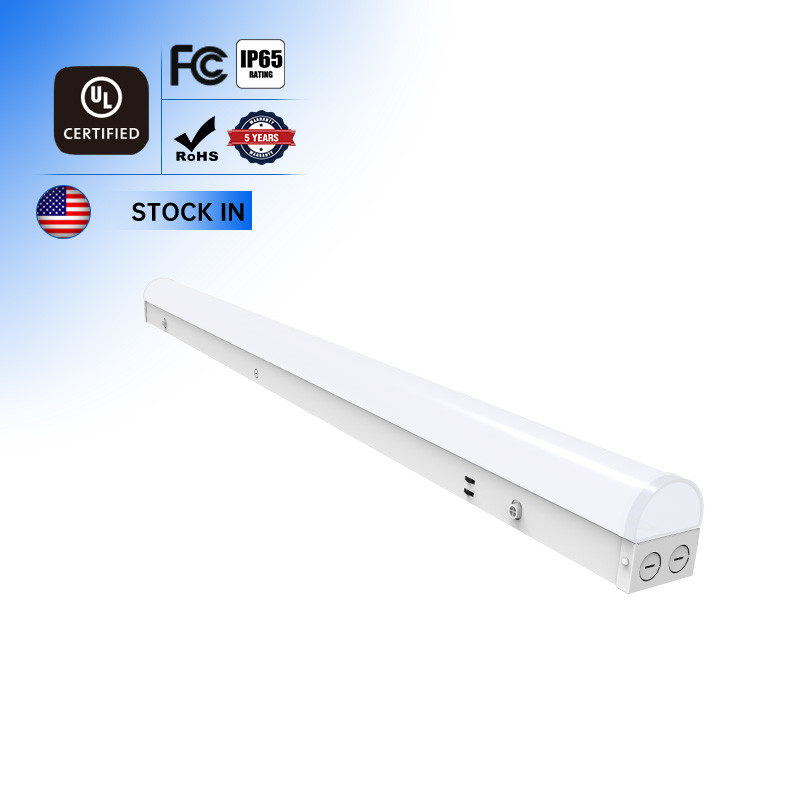
An LED linear strip light is a long, narrow fixture housing LED chips along its length. Unlike traditional fluorescent strips that use tubes and ballasts, LED strips integrate the light source directly into the housing, eliminating ballast losses and improving efficiency.

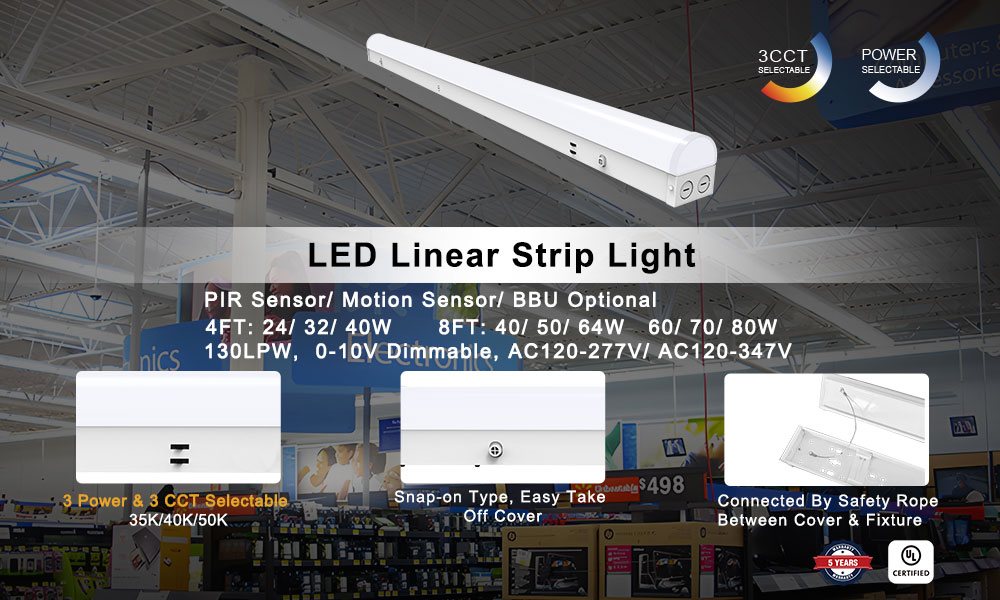
Modern LED linear strips like the SS-SP05 series offer features impossible with fluorescent technology:

  • Selectable wattage – Adjust brightness to match your needs
  • Selectable color temperature – Choose 3500K, 4000K, or 5000K with one fixture
  • 0-10V dimming – Integrate with lighting controls
  • Instant start – No flicker, no warm-up time
  • 50,000+ hour life – 10+ years of maintenance-free operation

LED Linear Strip Light Applications

🏭 Warehouse & Distribution Centers

LED strip lights excel in warehouse aisles where uniform illumination improves safety and productivity. The SS-SP05-8 (8ft model) covers wide aisles with up to 13,000 lumens, while 4ft models fit between shelving units.

Warehouse Area Recommended Model Mounting Height
Narrow aisles (6-8ft) SS-SP05-2 (2ft) 8-12 ft
Standard aisles (8-10ft) SS-SP05-4 (4ft) 10-16 ft
Wide aisles (12ft+) SS-SP05-8 (8ft) 14-20 ft

🏬 Retail Stores & Showrooms

The clean, uniform light of LED strips enhances merchandise presentation without distracting from products. Selectable color temperature lets you match store ambiance—3500K for warm, inviting spaces; 5000K for bright, energetic displays.

🏫 Schools & Educational Facilities

Flicker-free LED lighting reduces eye strain and improves concentration. LED strips in classrooms, hallways, and gymnasiums provide consistent illumination that supports learning environments.

🏥 Hospitals & Healthcare

Healthcare facilities benefit from LED’s instant start and silent operation. No humming ballasts, no flicker—just reliable, high-quality light for patient rooms, corridors, and treatment areas.

🏢 Offices & Commercial Spaces

Modern offices favor linear LED strips for their sleek profile and even light distribution. Suspended mounting creates indirect lighting effects, while surface mount fits lower ceilings.

2ft vs 4ft vs 8ft LED Strip Lights: Which Size?

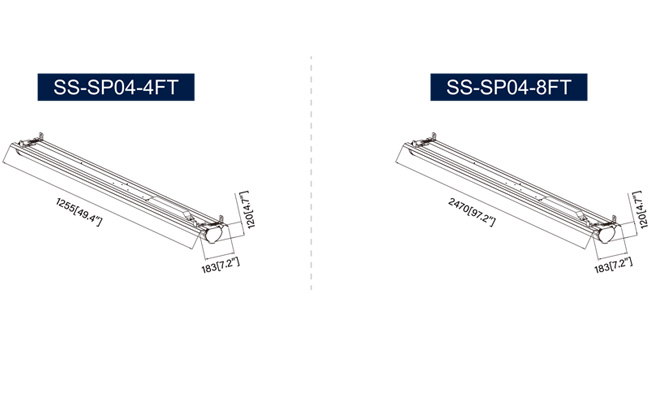
LED Linear Strip Light Sizes

The right length depends on your ceiling height, aisle width, and fixture spacing:

Size Wattage Lumens Best For
2ft 24-40W 3,600-5,200 Narrow aisles, low ceilings, under-shelf
4ft 40-64W 5,200-8,300 Standard commercial, most common
8ft 60-100W 7,800-13,000 Wide aisles, high ceilings, industrial
💡 Pro Tip: The 4ft model is the most versatile—it fits standard ceiling grids and replaces 4ft T8 fixtures. If unsure which size to choose, start with 4ft.

Key Features to Look For

1. Selectable Wattage (3-Power Tunable)

Modern LED strips like the SS-SP05 series offer 3 wattage settings via an internal switch. This flexibility means:

  • Order one SKU for multiple applications
  • Adjust brightness after installation without changing fixtures
  • Future-proof your lighting design

2. Selectable Color Temperature (3-CCT Tunable)

Choose between warm (3500K), neutral (4000K), or cool (5000K) white light:

  • 3500K – Warm, inviting; retail, hospitality, healthcare
  • 4000K – Neutral white; offices, schools, commercial
  • 5000K – Daylight; warehouses, industrial, garages

3. 0-10V Dimming

Standard 0-10V dimming enables integration with:

  • Occupancy sensors (auto-dim when unoccupied)
  • Daylight harvesting systems
  • Building automation systems
  • Manual dimmer switches

4. Certifications

Look for these certifications for code compliance and rebates:

  • UL/ETL Listed – Safety certification required for most installations
  • DLC Qualified – Required for utility rebates in most regions
  • CE/RoHS – Required for European markets

Installation Methods

LED Strip Light Installation

LED linear strips offer three primary mounting options:

Surface Mount

Direct ceiling mount with included brackets. Best for:

  • Flat ceilings (drywall, concrete, wood)
  • Lower ceilings (under 12ft)
  • Simple, clean installation

Suspended Mount

Hang from chains or cables for higher ceilings. Benefits:

  • Positions light closer to work surfaces
  • Creates indirect uplighting effect
  • Ideal for 14-20ft ceilings

Wall Mount

Vertical installation for cove lighting or perimeter illumination.

LED Linear Strip Light vs Fluorescent: Comparison

Factor LED Strip Fluorescent T8
Energy Use 40W 32W tube + 8W ballast
Lifespan 50,000+ hrs 15,000-20,000 hrs
Maintenance None Tube + ballast replacement
Start Time Instant 1-3 seconds
Flicker None May flicker with age
Color Temp Selectable Fixed per tube
Dimming 0-10V standard Special ballast required
Mercury None Contains mercury

Energy Savings Calculator

Calculate your potential savings when upgrading from fluorescent to LED:

Example: 100 fixtures, 12 hrs/day, $0.12/kWh

Fluorescent (40W × 100 × 12h × 365d ÷ 1000 × $0.12) $2,102/year
LED Strip (24W setting × 100 × 12h × 365d ÷ 1000 × $0.12) $1,261/year
Annual Savings $841/year

How to Choose the Right LED Linear Strip

Follow this decision tree:

  1. Measure your space – Ceiling height, aisle width, fixture spacing
  2. Determine brightness needs – Warehouses: 20-30 FC; Retail: 30-50 FC; Offices: 30-50 FC
  3. Select length – Match ceiling height: 8-12ft → 2ft; 10-16ft → 4ft; 14-20ft → 8ft
  4. Choose wattage – Higher wattage for higher ceilings and brighter needs
  5. Pick color temperature – Match application: warm for retail, cool for warehouse
  6. Verify certifications – UL/ETL for safety, DLC for rebates

Common Mistakes to Avoid

❌ Mistake 1: Choosing wattage too low for ceiling height
Result: Insufficient light levels, need to add more fixtures or replace existing ones.
❌ Mistake 2: Ignoring color temperature
Result: Light feels “wrong” for the space—too cold for retail, too warm for warehouse.
❌ Mistake 3: Not checking DLC qualification
Result: Missing out on utility rebates worth 20-50% of fixture cost.

Related Products

Conclusion

LED linear strip lights offer the perfect combination of energy efficiency, flexibility, and longevity for commercial and industrial applications. With selectable wattage, selectable color temperature, and 50,000+ hour lifespan, the SS-SP05 series provides a future-proof lighting solution that pays for itself in 2-3 years through energy savings alone.

Ready to upgrade your lighting? Contact HAROLUX for factory-direct pricing and expert guidance.

Last updated: March 2026